ChoosingWhich coating do you recommend for a metal building?
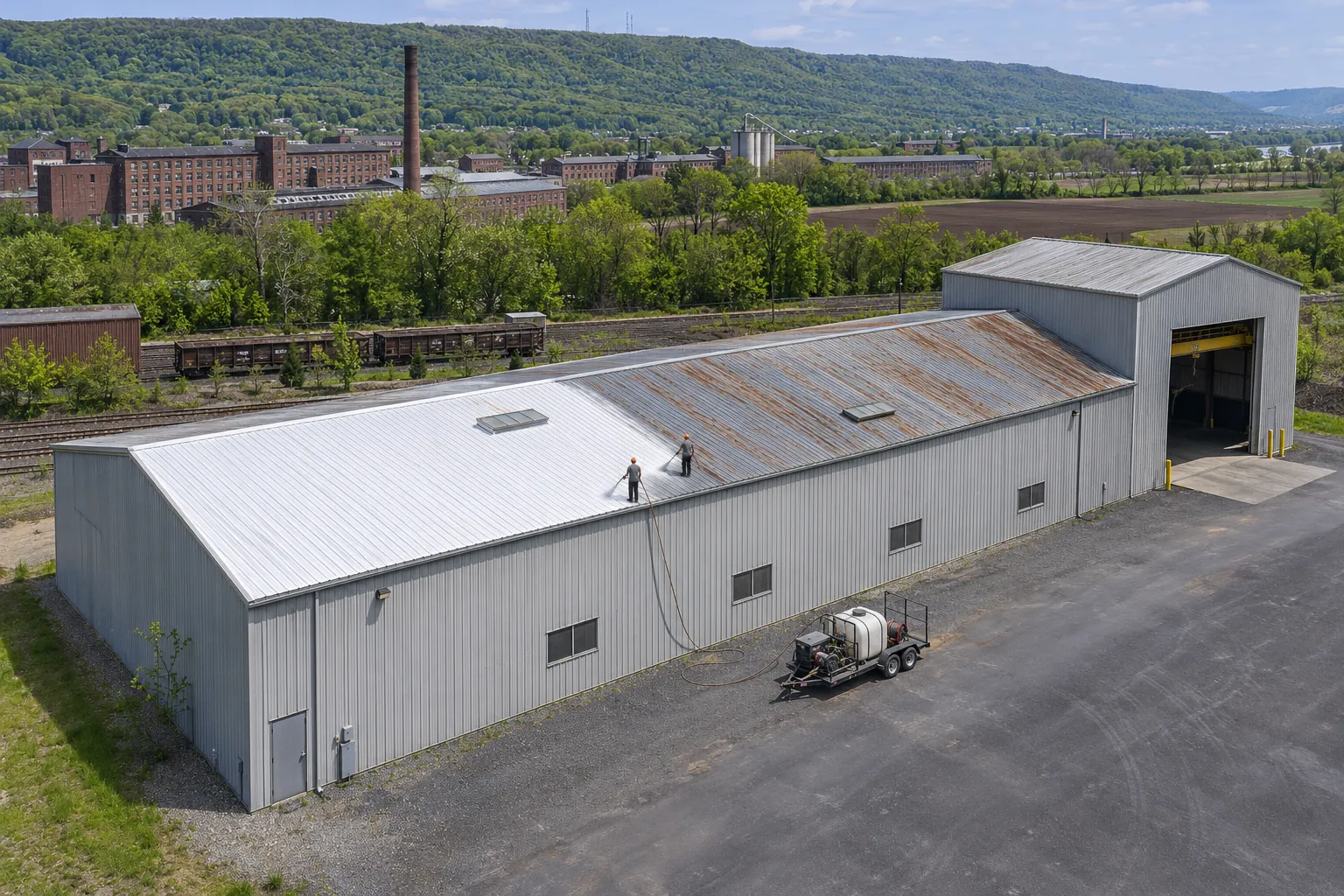
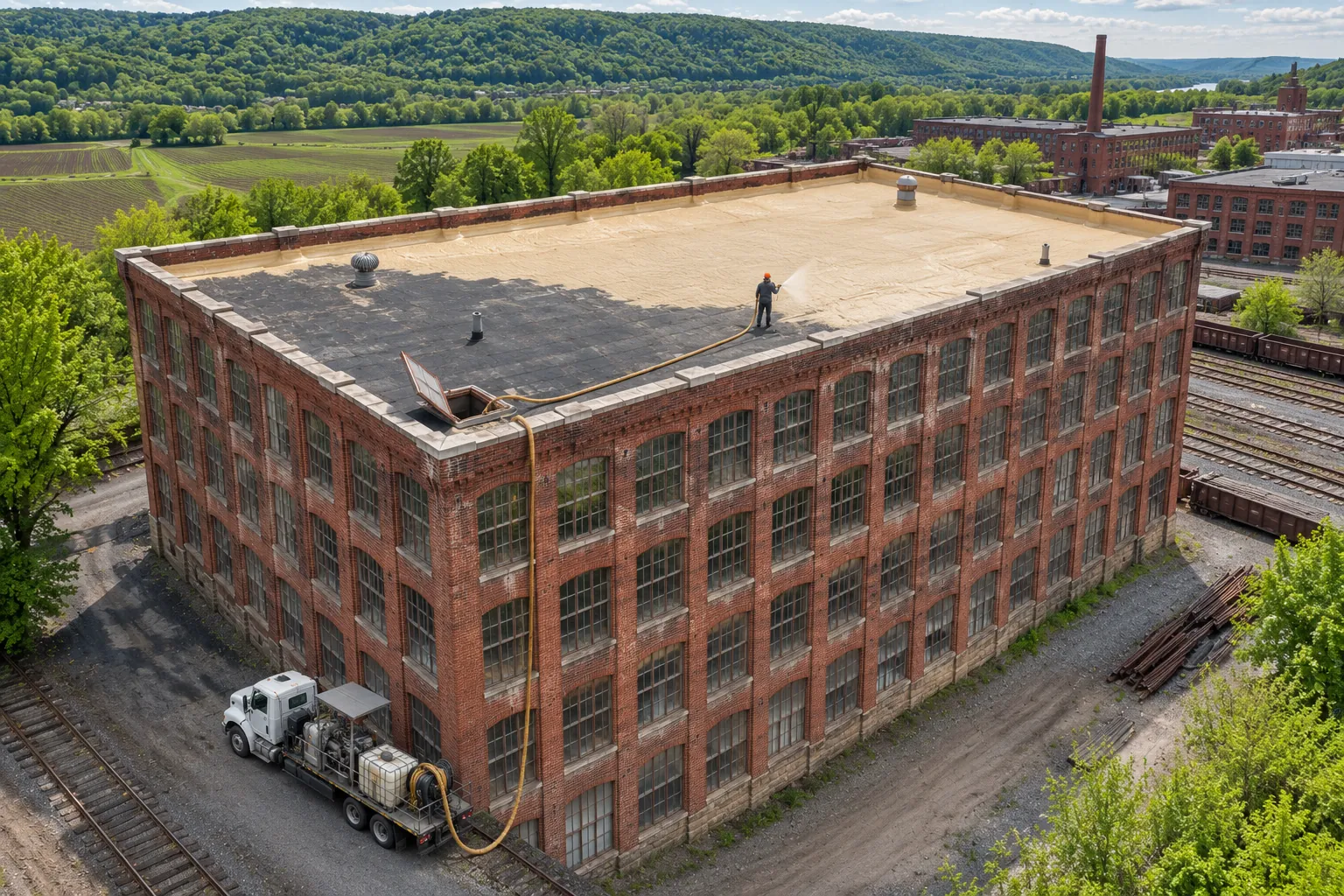
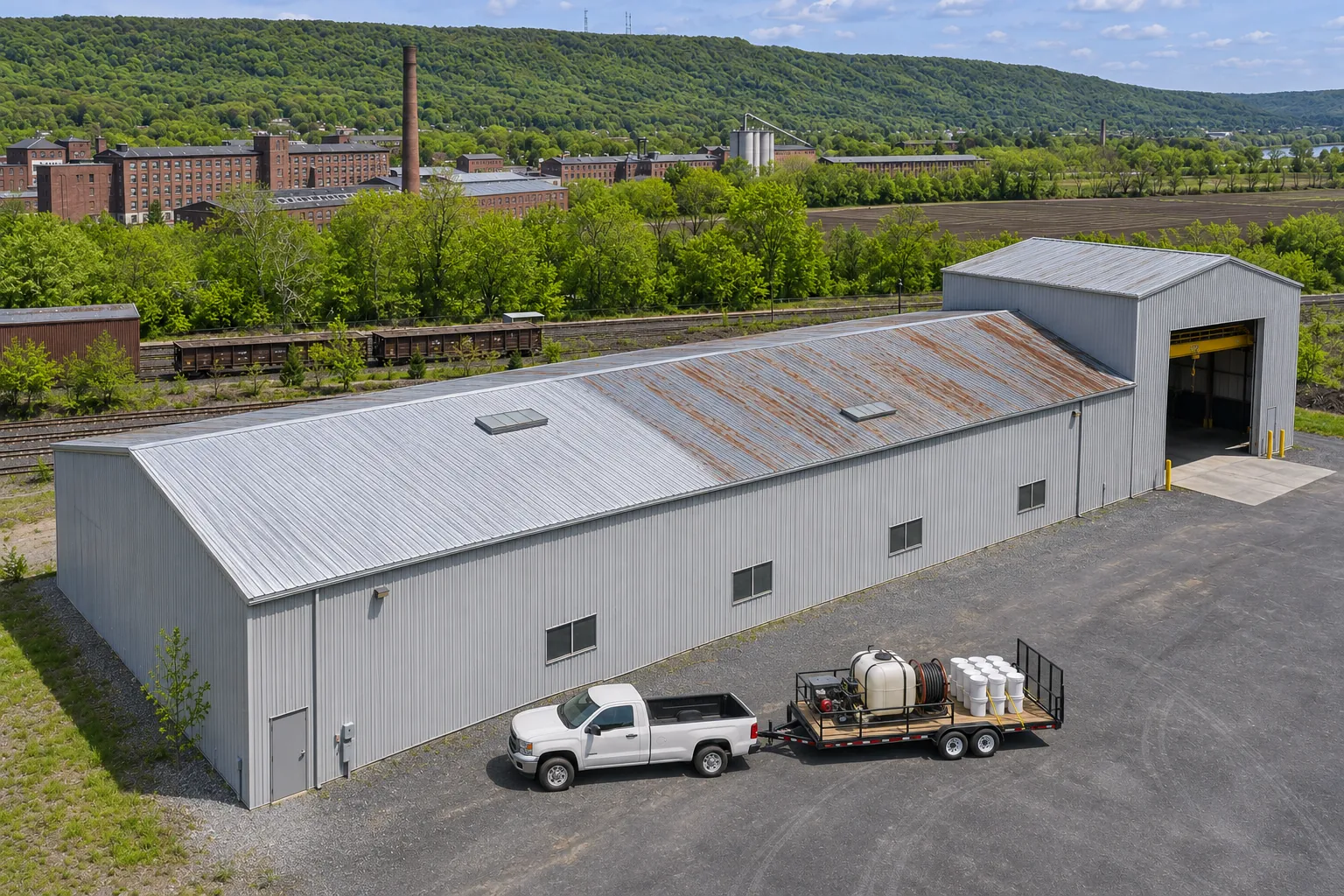
Most steel buildings with good slope get a metal coating system with rust primer and seam sealing. Roofs with low spots lean toward silicone, and buildings that need insulation lean toward foam.
We pick after the inspection, once we know the condition of the screws, laps, and insulation.
Mixing systemsCan different coatings go on different parts of one roof?
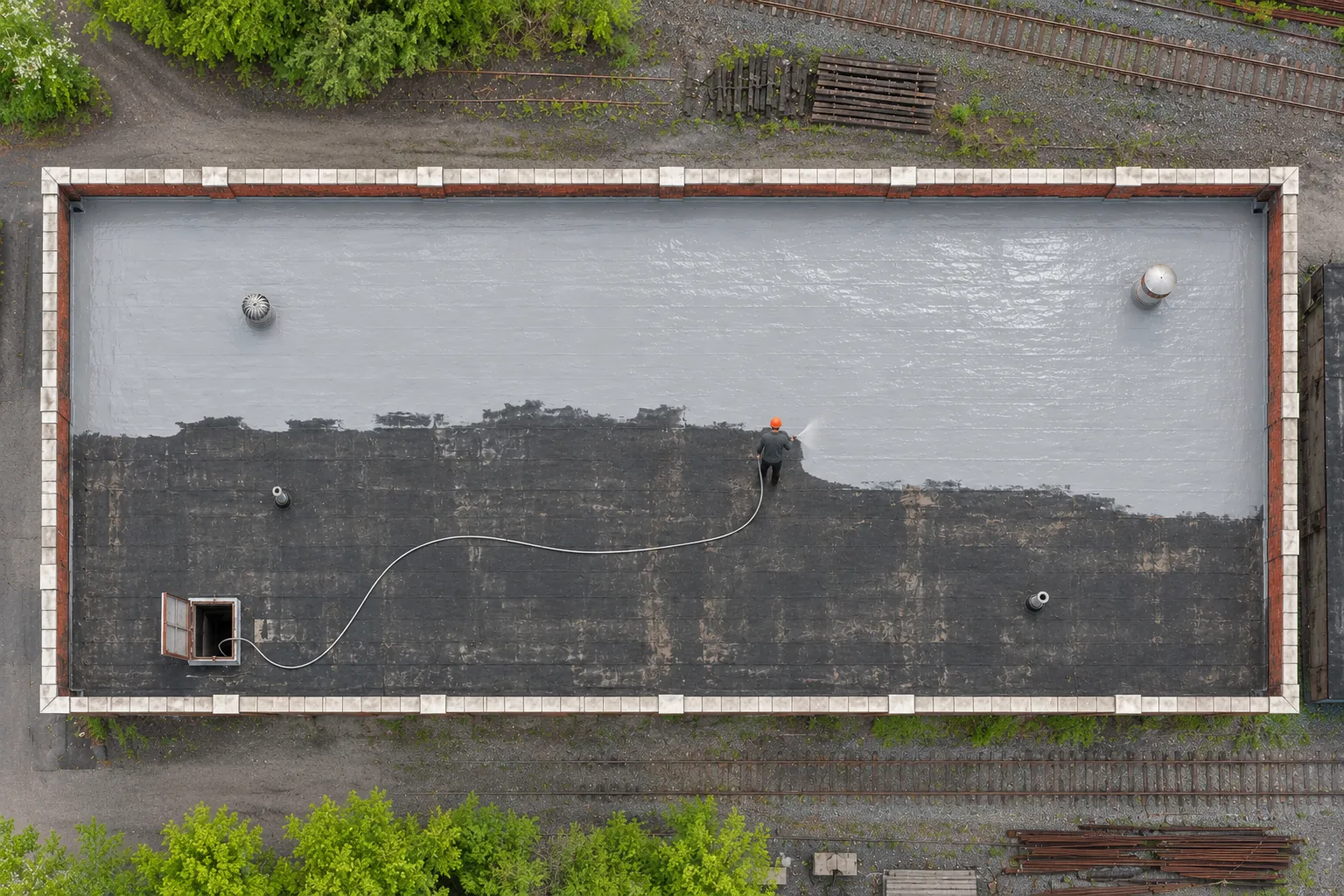
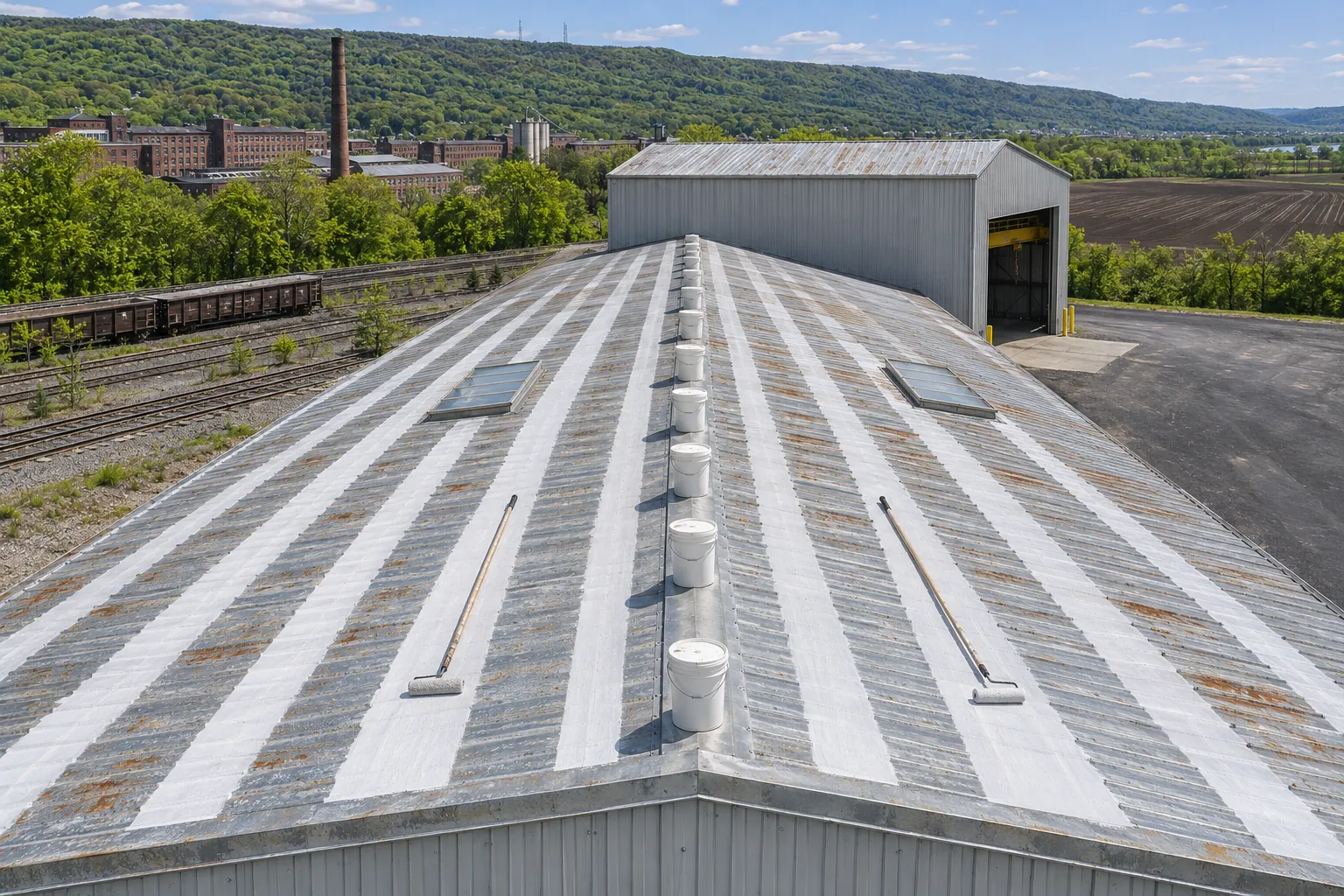
Yes, on larger buildings that happens. A low-slope section next to a pitched one might take silicone while the pitched panels take acrylic. We keep the edges between systems clean and documented so later recoats use the right product in each area.
RepairsDo you repair the roof as part of a coating job?
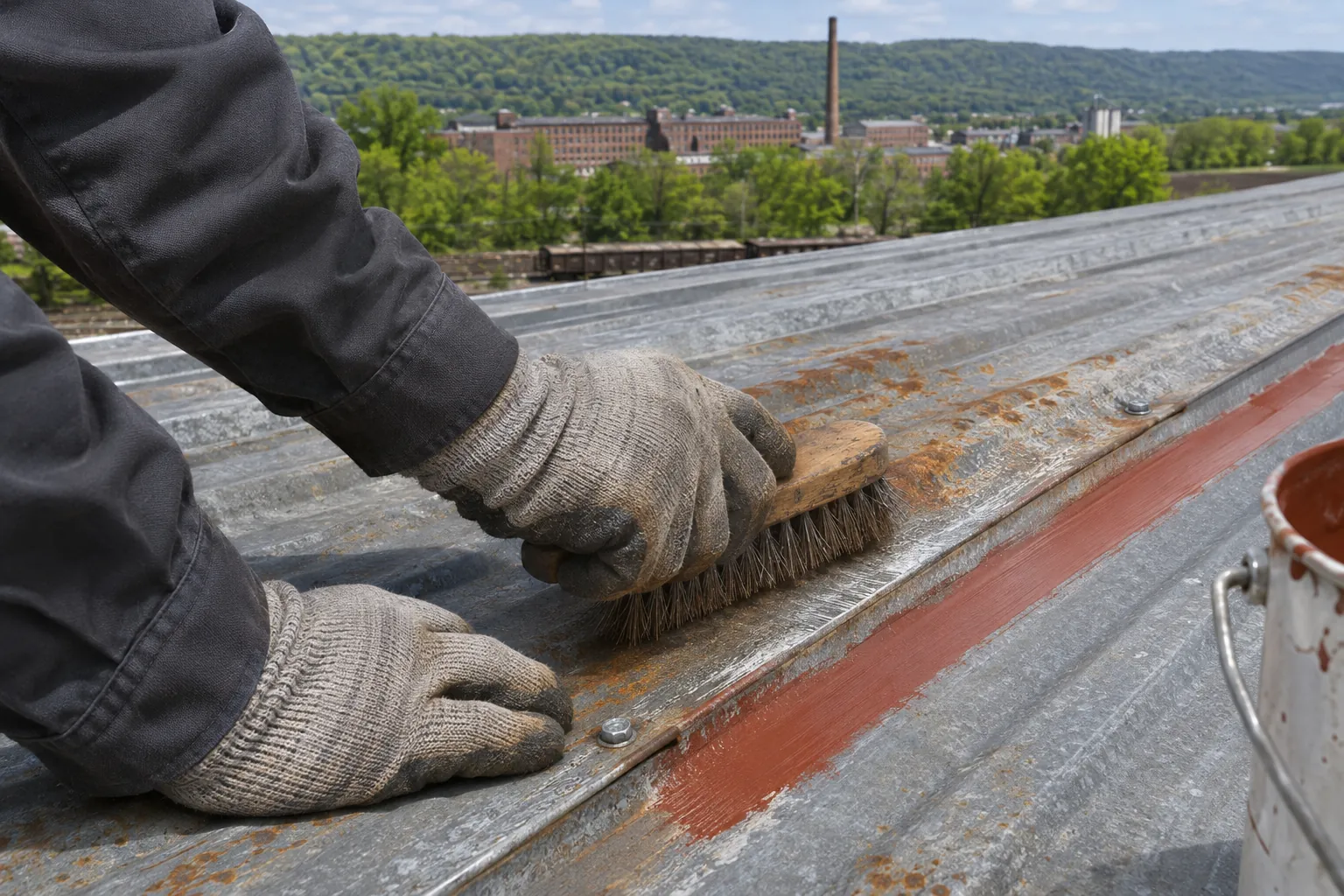
Repair is part of every coating job we take. Fasteners, seams, flashing, and small rusted-through spots are fixed before coating. Larger problems, like wet insulation across a wide area, are priced separately so you can see what the roof needs before deciding.
WeatherWhat weather do you need to coat a roof in Reading?
Dry surfaces and temperatures inside the product sheet range. Acrylic needs a longer dry stretch than silicone, and foam needs a dry deck and low wind. Spring through fall gives the most working days; winter jobs are planned around the product limits.
CostWhat drives the price of a coating job?
Roof size, the system chosen, coating thickness, how many fasteners need replacing, and how much rust and seam work the roof needs. Access, rooftop units, and penetrations add time too. The free ballpark estimate gives a planning range before the inspection.
InspectionWhat does a coating inspection include?
A walk of every panel or section, hand tests of fasteners, a look at laps, flashing, curbs, and drains, and a check for wet insulation from below where we can reach it.
You get a list of what we found and what each system would need.
MaintenanceWhat upkeep does a coated roof need?
Keep drains and gutters clear, walk the roof after major storms, and wash it every few years. Worn walkways and damaged spots get touched up with the same coating family before water reaches the steel or deck.