Restore Every Metal Roof On A Multi-Building Property
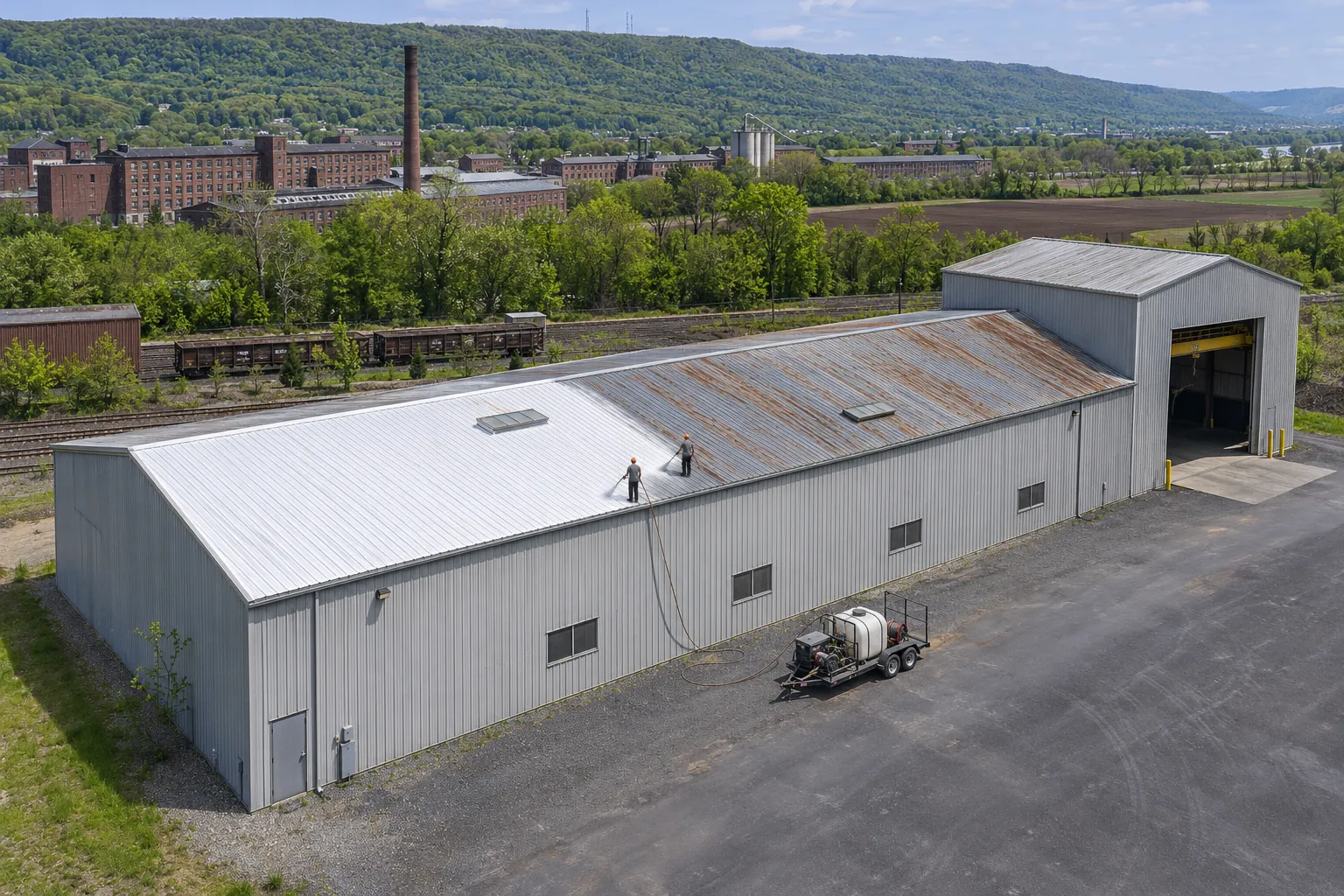
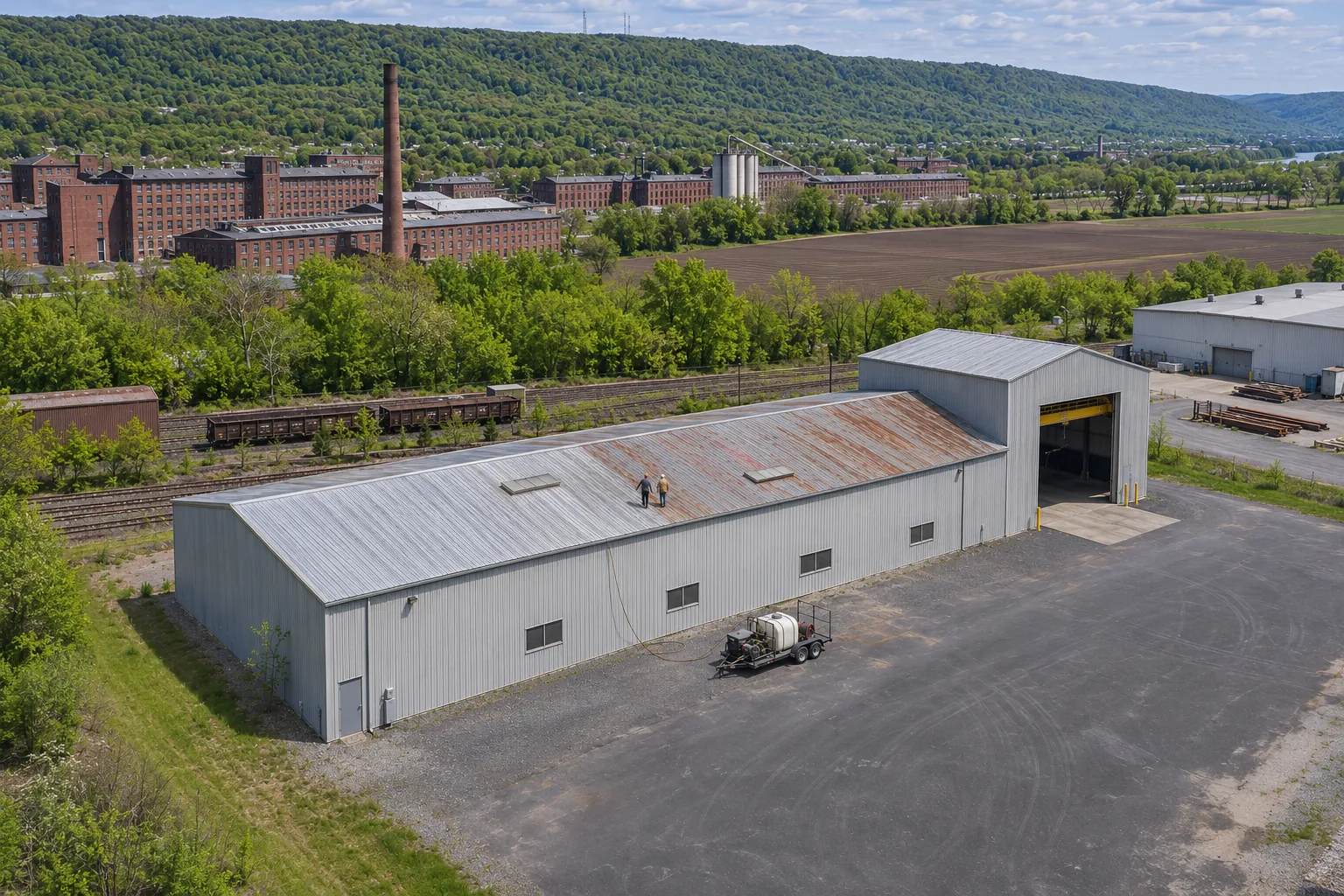
As a Downingtown metal roof coating contractor, we inspect and coat metal roofs on properties with a main building plus sheds, garages, and equipment buildings.
Downingtown Metal Roof Coating Across a Whole Property
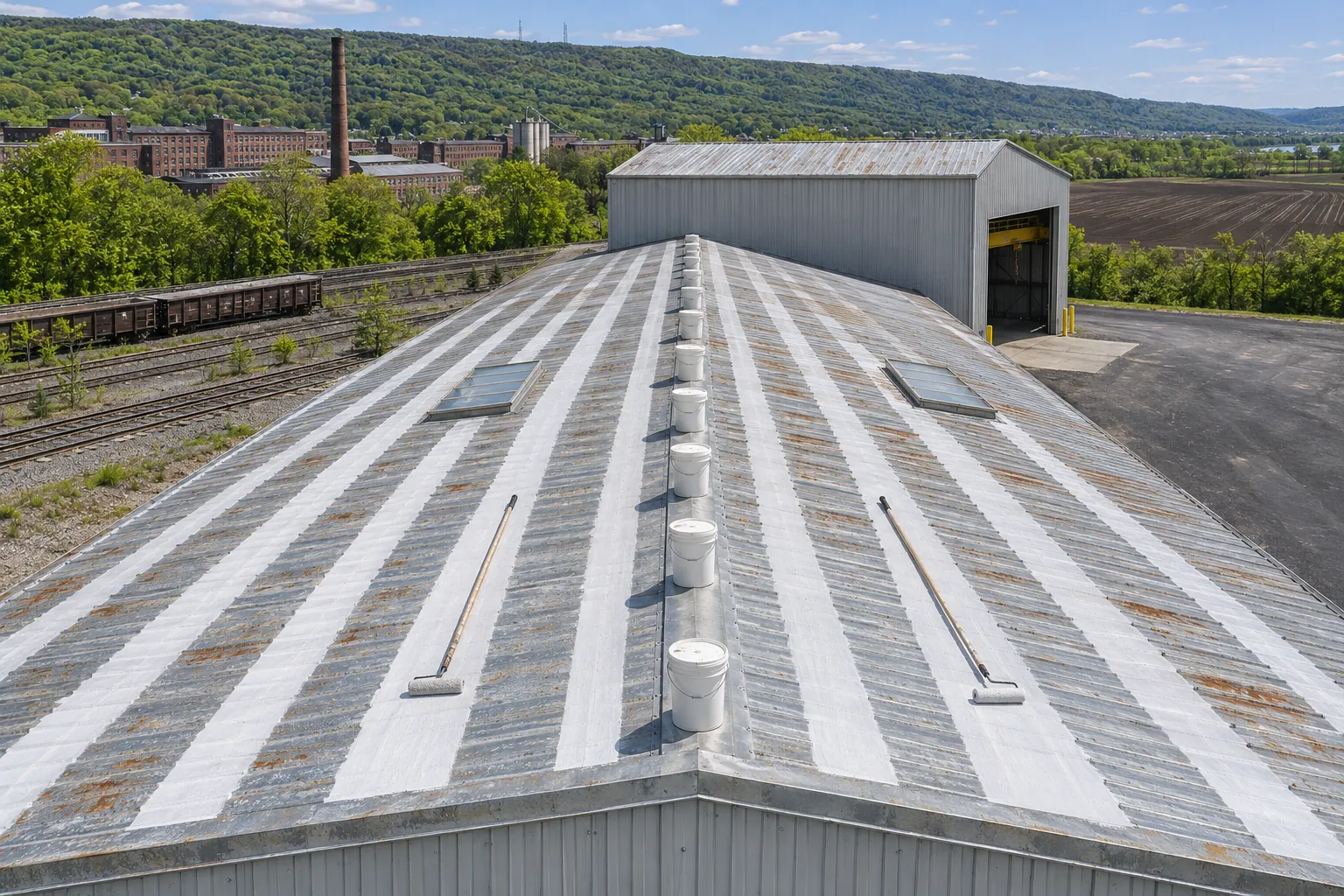
Downingtown metal roof coating jobs often cover more than one roof. A property might have a main shop, an equipment shed, and a storage barn, each with different screws, rust, and slope.
We inspect all of them, then rank the work so the leakiest roof goes first and equipment is staged once for the whole property. Separate pricing per building means the property can be done in phases that fit the budget.
Every building inspected and listed with its own repairs
Work ranked by leak severity and use
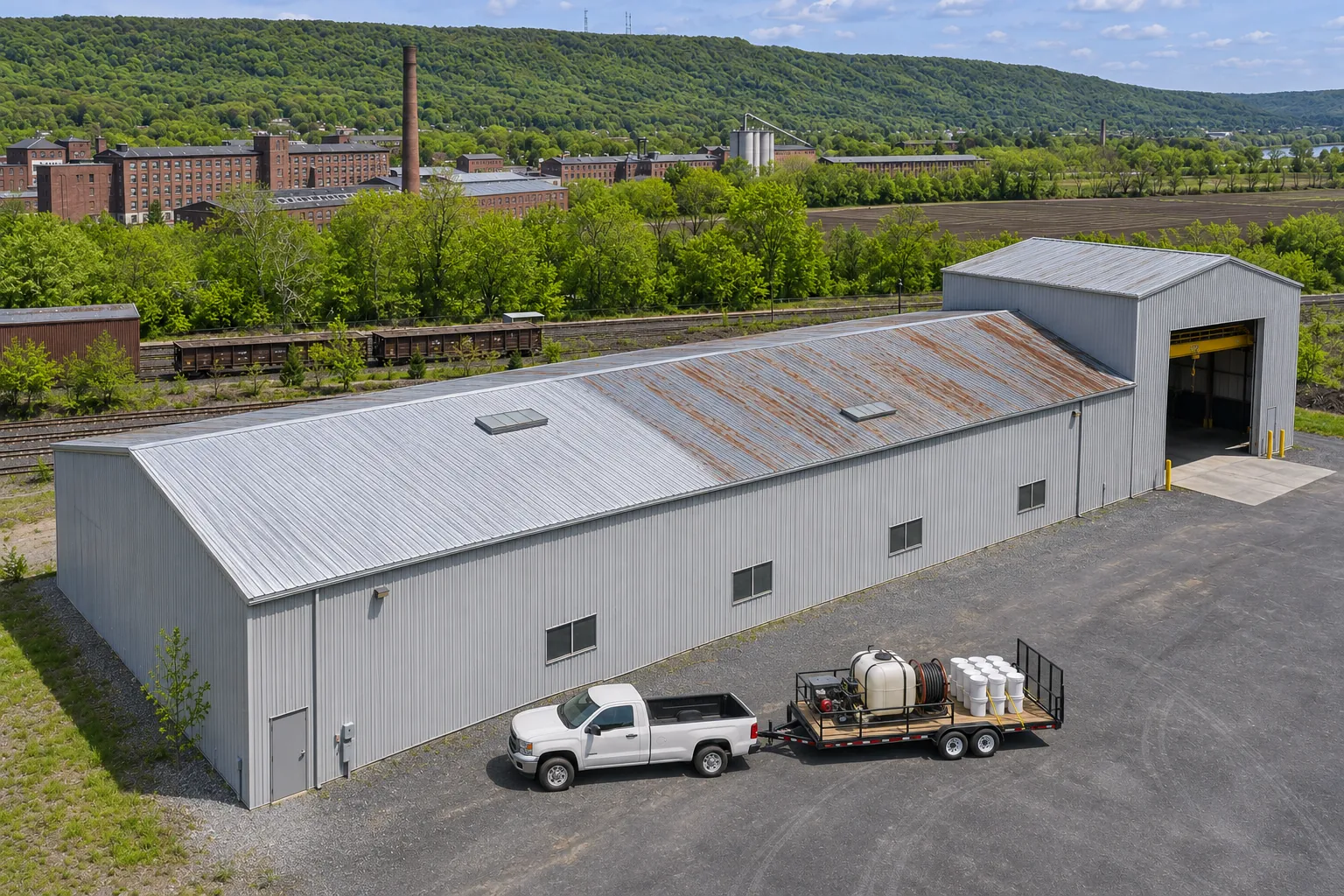
One staging setup for the whole property
Separate pricing per building so you can phase it
Metal Roof Coating Needs on Downingtown Properties
Older outbuildings and newer main buildings show different symptoms. Here is how they line up with roof conditions.
Fastener Repair Before Roof Coating On An Equipment Shed
Inside The Building
Equipment parked inside picks up rust spots and water marks after storms.
On The Roof
Screws have backed out along the purlins and the holes have widened from years of movement.
Leaks Where Two Buildings Meet
Inside The Building
Water runs down the wall where an addition joins the main shop.
On The Roof
Flashing between the two roofs has separated, and the joint needs a repair detail.
Rusty Eaves On A Storage Barn
Inside The Building
Stored materials near the walls get damp while the middle stays dry.
On The Roof
Eave trim and panel ends have rusted, letting water in along the low edge.
Ponding On A Low Addition
Inside The Building
An office addition with a flatter roof shows a stain under one corner.
On The Roof
Water sits at a low spot near the downspout and works into a lap.
Skylight Panels Leaking In The Shop
Inside The Building
Drips land near fiberglass skylight panels on the main shop roof during storms.
On The Roof
Skylight panels have aged and cracked at their fasteners, so they get replaced to match before the roof is coated.
Benefits of Coating Your Roof
Coating several roofs on one property adds up to these gains.
Every Building Protected
Main buildings and outbuildings get the same repair and coating standard.
Equipment Staged Once
One setup serves the whole property, keeping mobilization costs down.
Work Phased By Budget
Separate pricing per building lets owners coat the worst roofs first.
Screws Fixed Throughout
Each building gets fastener work sized to its own purlins and panels.
One Record For The Property
A single list of products and thickness per building keeps later recoats consistent.
Commercial Roof Coating Options for Downingtown
Different buildings on one lot can call for different systems.
Sheds
Metal Roof Coating for Equipment Sheds
Exposed-fastener sheds get new screws, rust primer, and an acrylic coat that recoats easily later. Rusted eave trim on the sheds is replaced as part of the job.
Low Additions
Silicone On Flatter Sections
Lower-slope additions that hold water take silicone after drains and downspouts are fixed. Downspouts on the additions are reset to the low corner.
Whole Property
Coating Several Buildings on One Property
One inspection, one ranked list, and one staging plan cover every roof on the lot. Staging moves once around the lot as each roof finishes.
Fasteners
Fastener Repair Before Roof Coating
Screws that spin in widened holes are replaced with larger ones on every building before primer goes on. Washers are replaced on every screw that stays.
Several Roofs, All Starting To Leak?
We price each building separately so you can phase the work. Start with a ballpark range for the main roof.
Metal Roof Coating Questions From Downingtown Owners
Fasteners
Do Downingtown equipment buildings need fastener repairs before restoration?
Where screws or washers have stopped doing their job, yes. We check holding strength, hole condition, and the metal around each screw instead of sealing over every one. The repair leaves a tight connection the seam and coating work can build on.
Phasing
Can we coat one building now and the rest later?
Yes. Each building gets its own price, so you can start with the worst roof. We note the rest so later phases use the same products and prep.
Mixed roofs
Do all the buildings need the same coating?
No. Sloped sheds might take acrylic while a flatter addition takes silicone. We keep records of what went where so future recoats match.
Joints
Why do leaks show up where an addition meets the main building?
The flashing between two roofs moves as each building expands and settles. Once it separates, water runs down the wall. We rebuild that joint before coating either roof.
Barns
Is it worth coating an older storage barn?
If the frame is solid and the panels are mostly firm, coating extends its use for far less than new metal. If rust has eaten through many panels, replacement is the better spend.
Equipment
Do vehicles and equipment have to come out of the sheds?
Usually not for coating, since the work happens on top. We ask for space near the doors while we work on that roof and cover anything parked close to the eaves during spraying.
Records
Will we get a record of what each building received?
Yes. Each building gets its own entry listing repairs, primer, coating type, and thickness, which makes future recoats on the property straightforward.
Get a Downingtown Metal Roof Coating Contractor Out
Tell us how many buildings and roughly how big. We will inspect each one and rank the work.