Coating Exposed-Fastener Metal Roofs With Leaking Screws
Small drips land in a line across the floor, spaced about as far apart as the purlins.
Washers have dried out and cracked, so each screw head lets in water during wind-driven rain.

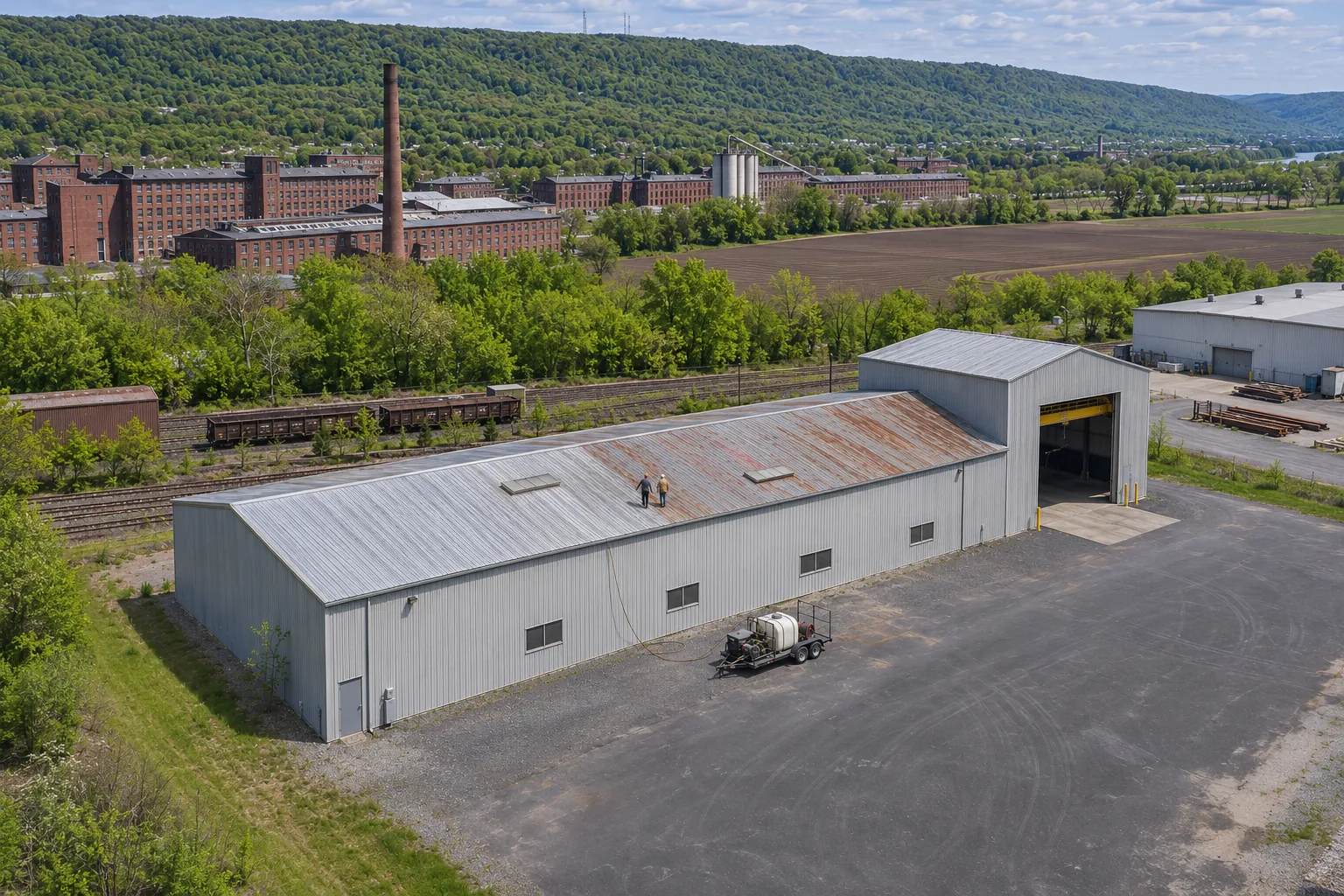
As a Reading commercial metal roof coating contractor, we fix fasteners, seal laps, treat rust, and coat steel roofs on working commercial buildings.
Reading commercial metal roof coating fits steel roofs that are still attached and mostly dry. The right column shows what has to change first.
| Roof Detail | Ready For Coating | Fix First Or Rethink |
|---|---|---|
| Panel rust | Red stain and light scale on firm steel | Holes, flaking edges, or steel you can push through |
| Screws | Tight, with washers that only need replacing | Spinning screws in worn purlins |
| Side and end laps | Closed, with old caulk that scrapes off | Laps that open and close with each temperature swing |
| Insulation | Dry under the panels | Soaked batts or a sagging liner |
| Previous paint | Chalky but still bonded | Peeling in sheets across the roof |
Steel roofs show trouble in pairs: a symptom inside and a cause on the panels.
Small drips land in a line across the floor, spaced about as far apart as the purlins.
Washers have dried out and cracked, so each screw head lets in water during wind-driven rain.
Rust streaks run down the siding below the eave after storms.
Cut panel ends and the eave trim are rusting where the factory finish stopped.
Leaks move around: fixed in one bay, then showing up two bays over.
Several generations of patches and caulk sit on the laps, and some have let go.
Popping sounds on sunny mornings and a ridge cap that looks uneven from the ground.
Thermal movement has loosened ridge fasteners and opened the closure strips.
Water spills over the gutter onto the sidewalk during heavy rain.
Gutters have rusted at the seams and filled with debris, so they need repair or replacement along with the roof.
The metal coating itself comes in a few forms. What the roof needs decides which one we use.
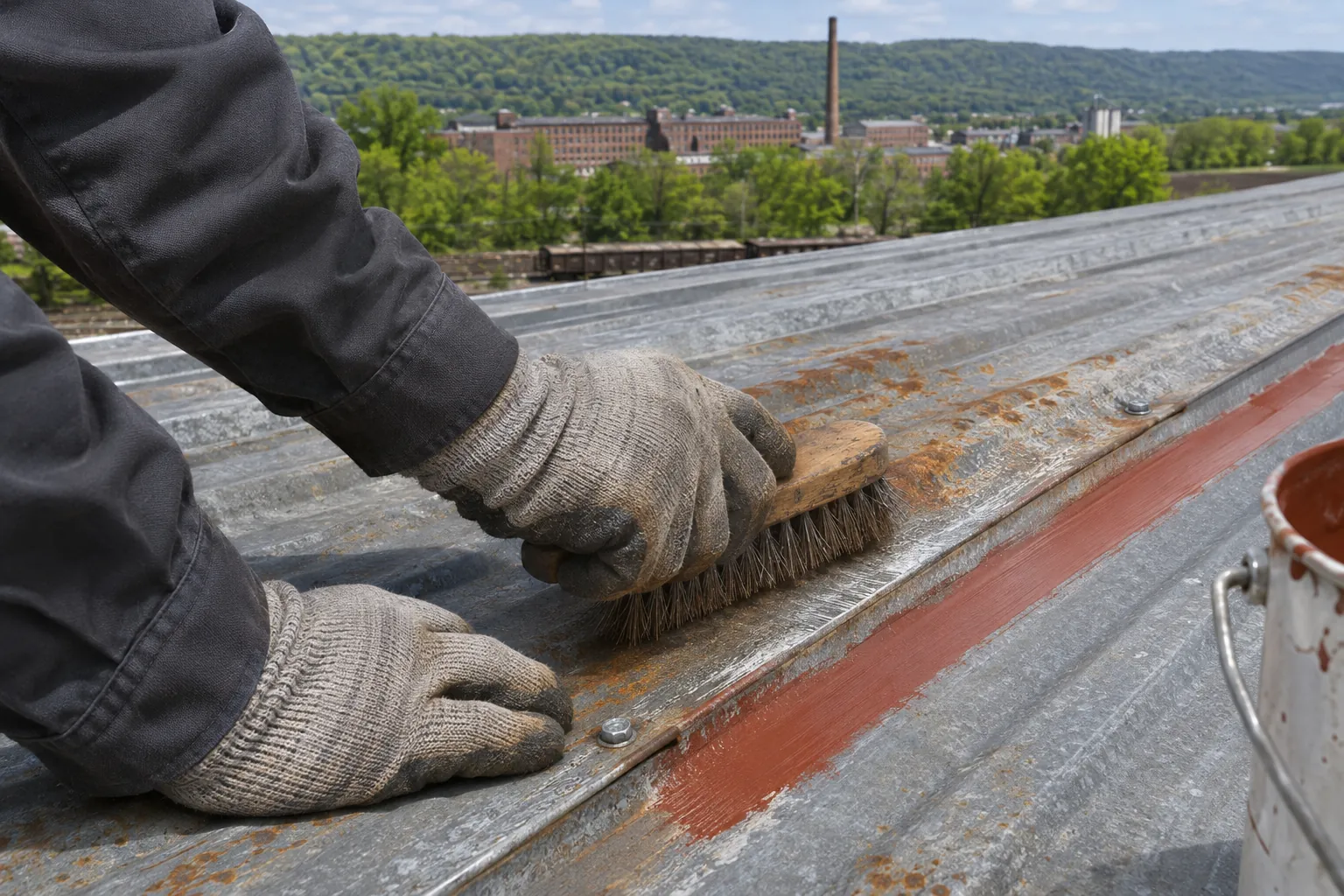
Rust is brushed or ground to firm steel, then a rust-inhibiting primer seals it so stains stay under the topcoat.
Pitched roofs that drain fast take acrylic well. Low-slope steel that holds water gets silicone. Both go over primed, sealed panels.
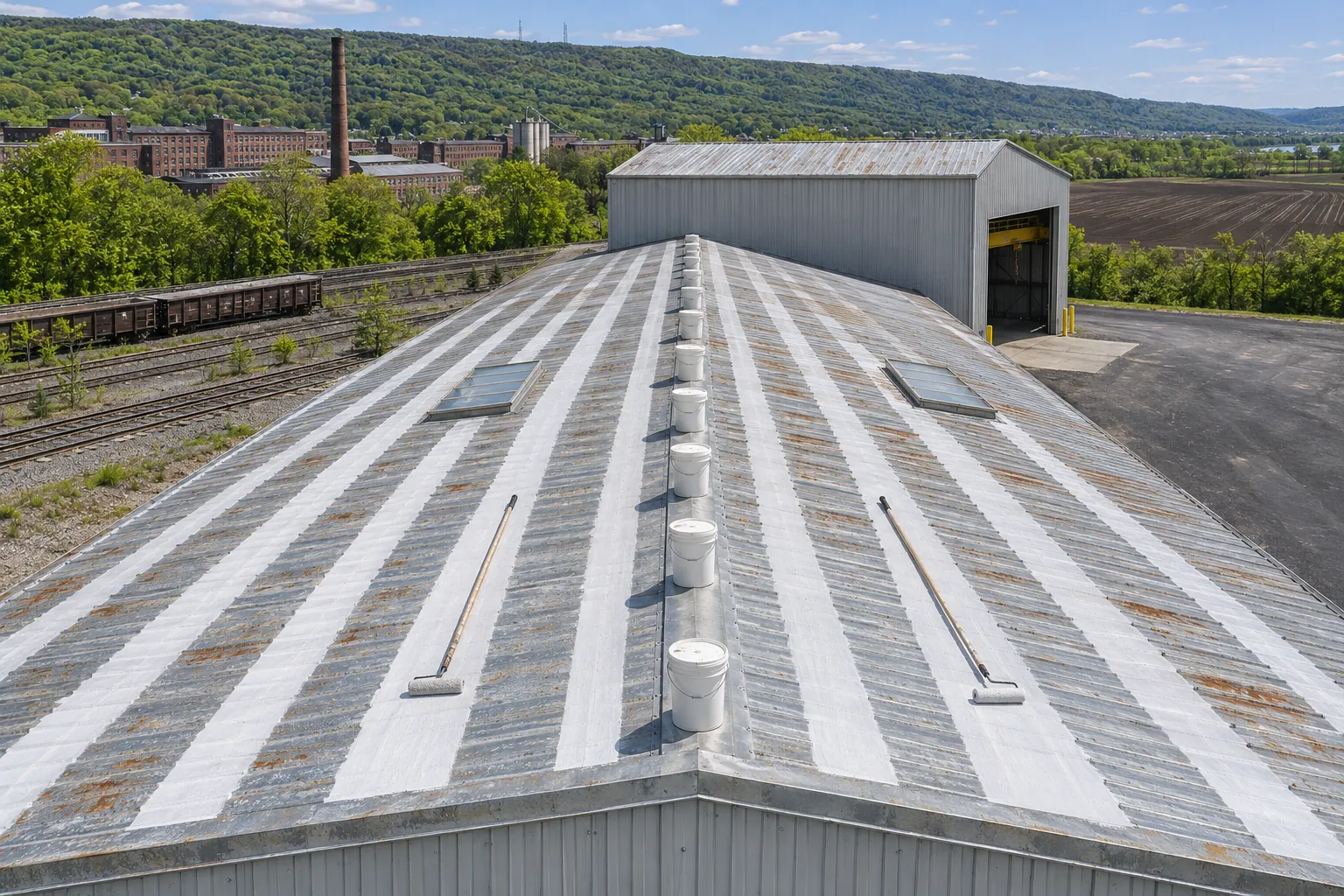
Laps and screw rows get a brushed-in sealer or fabric before the full coat, so the most-stressed joints carry extra thickness.

On a steel roof with a solid frame, coating pays off in these ways.
Primed screw heads disappear under the coating, ending the drip from every cracked washer at once.
Coating spans side and end laps, closing the joints that capillary water follows down the slope.
Primer and topcoat cut the steel off from air and water, so surface rust stops spreading.
White and light gray coatings reflect sun that bare, weathered steel soaks up.
Backed-out screws are the first repair on almost every steel roof we coat. A ballpark range starts with your roof size.
Get A Free EstimateSteel roofs get the same four stages, with most of the hours spent before any coating is opened.
We test screws by hand row by row, grade the rust on each panel, and check laps, ridge, and eave trim for gaps.
Failed screws come out and larger-diameter screws with new washers go in, holding into fresh steel at the purlin.
After washing, rust is taken back to firm steel and primed, then laps and screw rows get sealer or fabric.
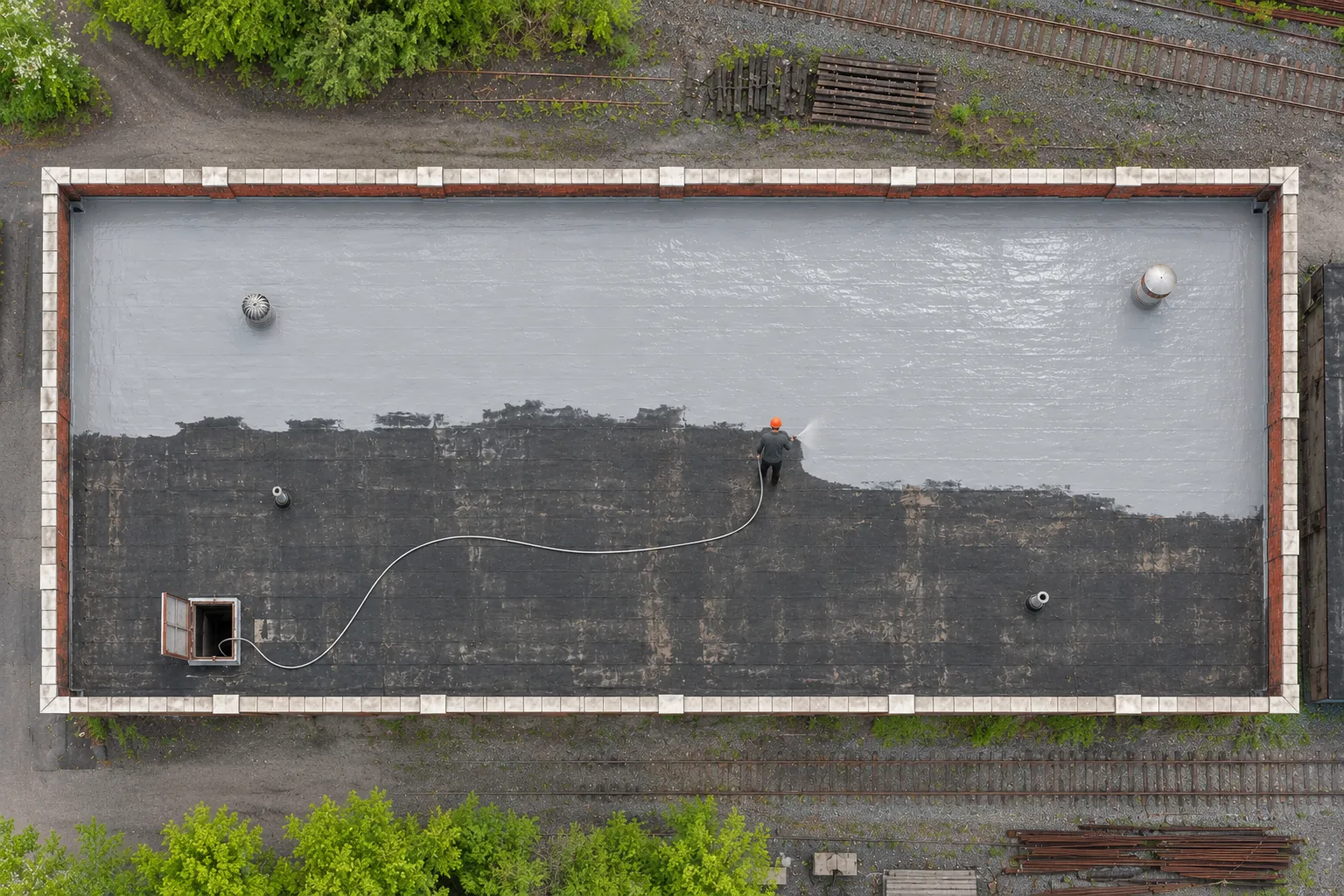
Base and top coats are sprayed or rolled to the specified build, checked with a wet-film gauge as we go.
Some steel roofs need a different system or a second one for part of the building.
Low-slope steel with puddles near drains moves toward silicone once the drains are cleared.

Steeper panels that dry quickly after rain take acrylic and recoat easily later.

Uninsulated steel buildings can take foam for insulation and a single continuous surface.

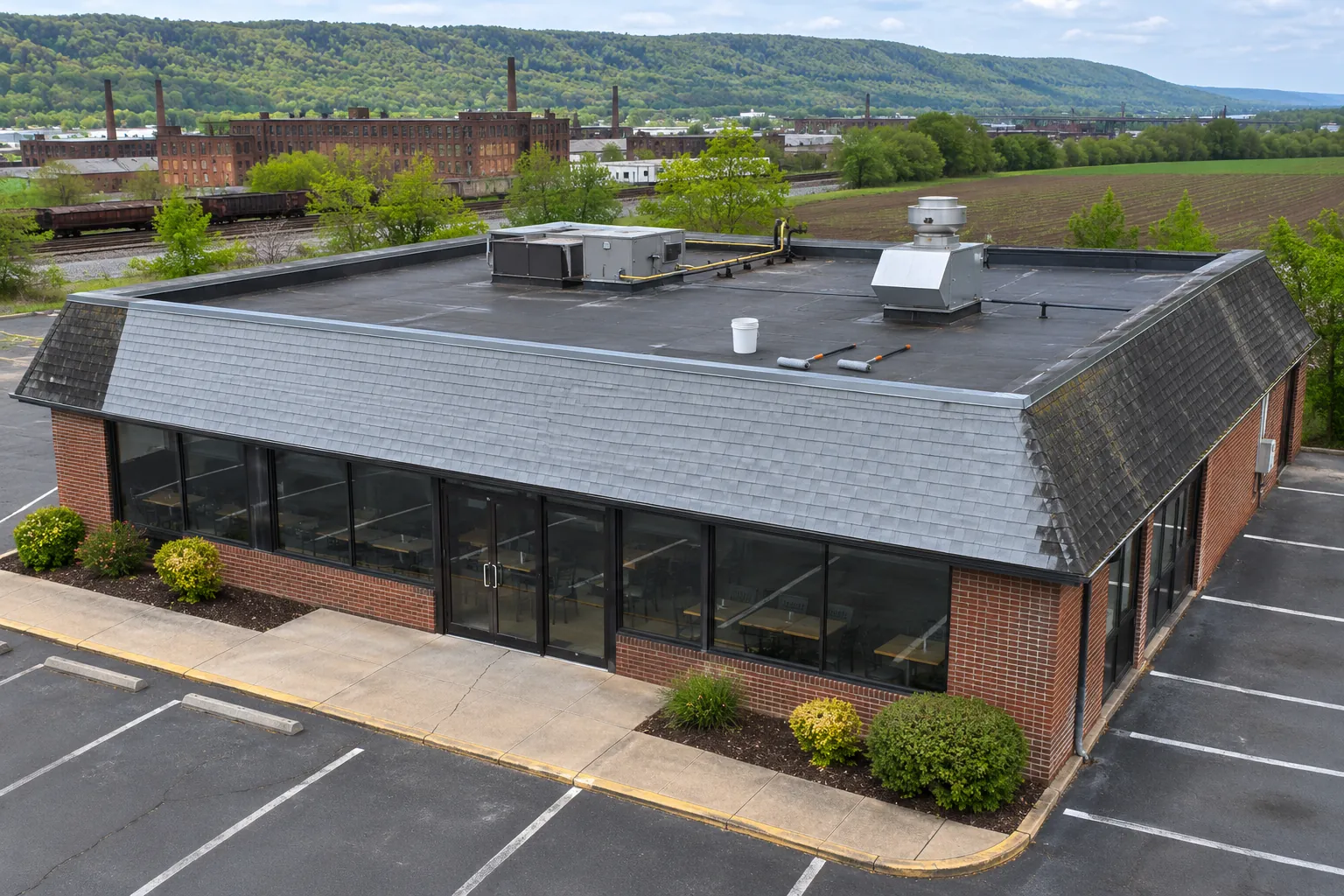
Mansards and shingle sections attached to a metal building are checked separately.
Each one is checked for grip and for rust under the washer. Screws that still hold get cleaned and primed. Those that spin or sit in widened holes are replaced with larger screws, and the surrounding steel is treated before sealing.
Coating thickness alone never fixes a loose screw.
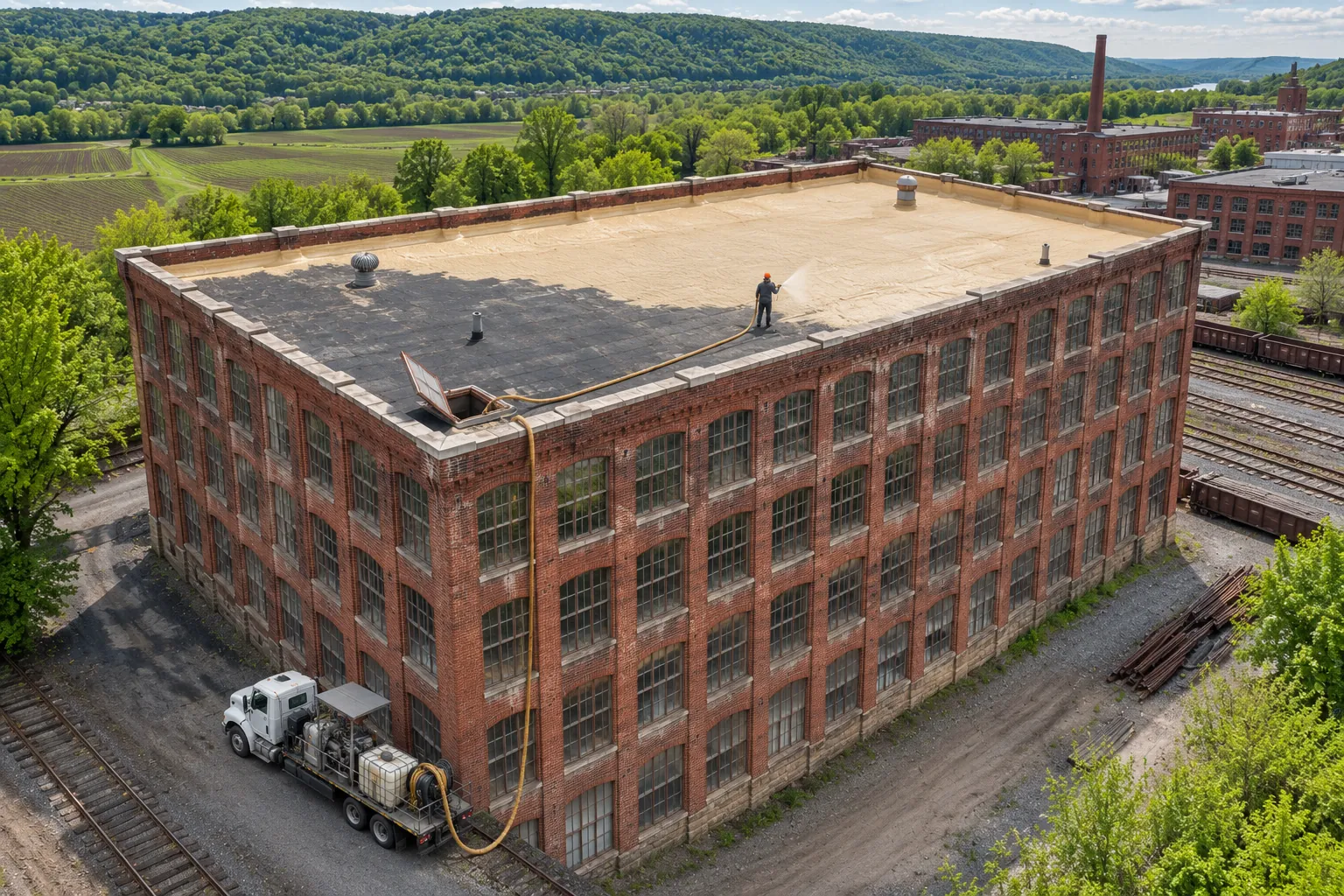
Restoration keeps the panels that are still serviceable and replaces the ones that are not. On older mill roofs we look closely where the metal meets brick walls, since flashing there often fails first.
The scope lists panel swaps, seam work, and prep together so the coating sits on steel that will hold it.
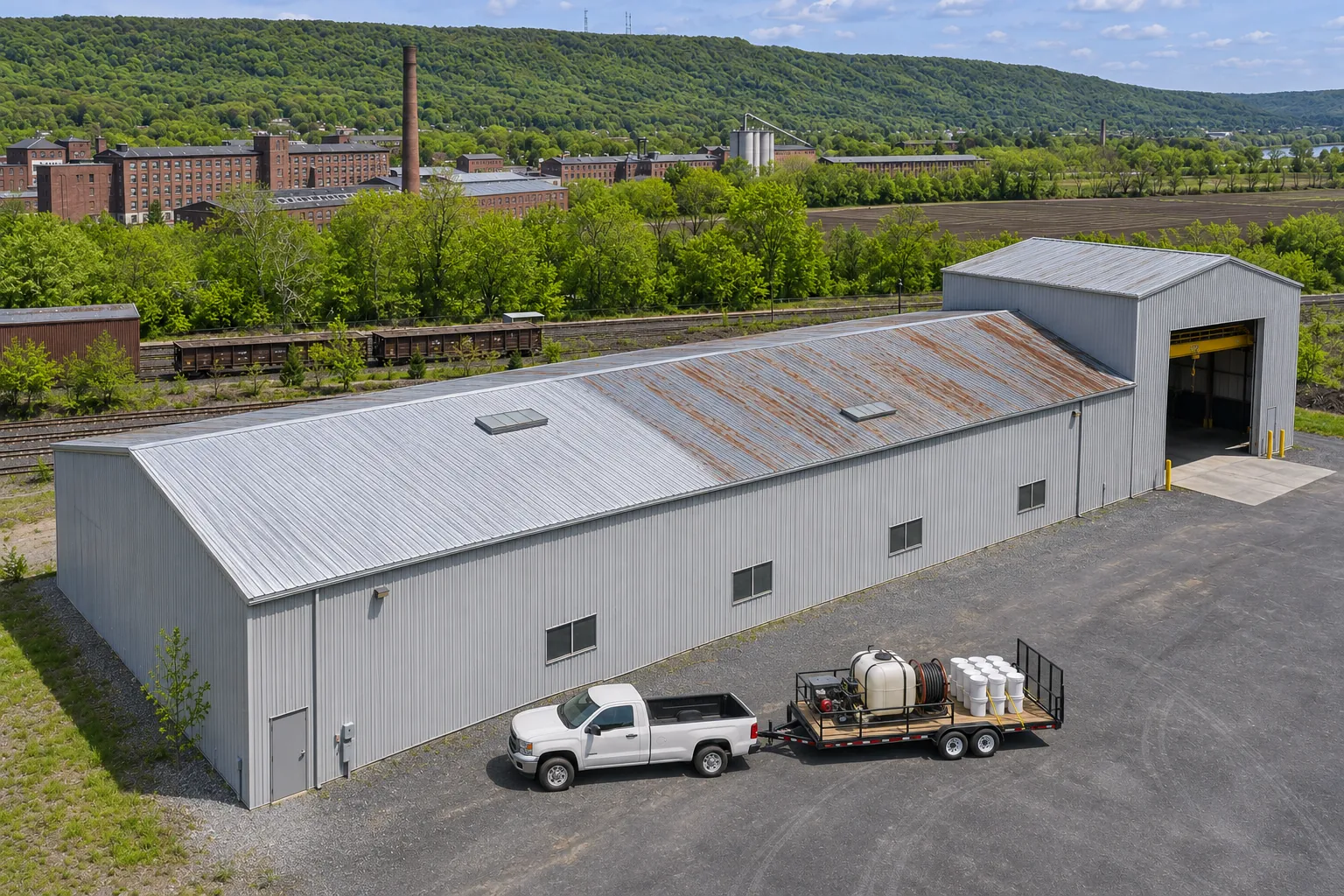
Drainage, the existing finish, and how often people walk the roof. Shops with exhaust fans and frequent equipment service see more traffic and grime, which affects both the choice and the walkway plan. We check adhesion after cleaning before we settle on silicone or acrylic.
For a pitched steel shop roof that drains well, an acrylic system over rust primer and sealed laps works well and recoats easily. Where the slope is low and water sits, silicone holds up better.
The deciding factor is how water behaves on that roof, which we see during the inspection.
Paint is a thin color coat. Restoration includes fastener replacement, seam sealing, rust treatment, and an elastomeric coating built many times thicker than paint. That thickness is what lets it stretch over laps as the panels expand and contract each day.

Tell us the roof size and what the screws and laps look like. We will inspect, repair, and coat.