
Inspecting the Underside of a Metal Roof After Drips
Inside The Building
Drips fall on cold, clear mornings with no rain in the forecast.
On The Roof
Panels are dry on top; warm indoor air is condensing on the bare steel underneath.
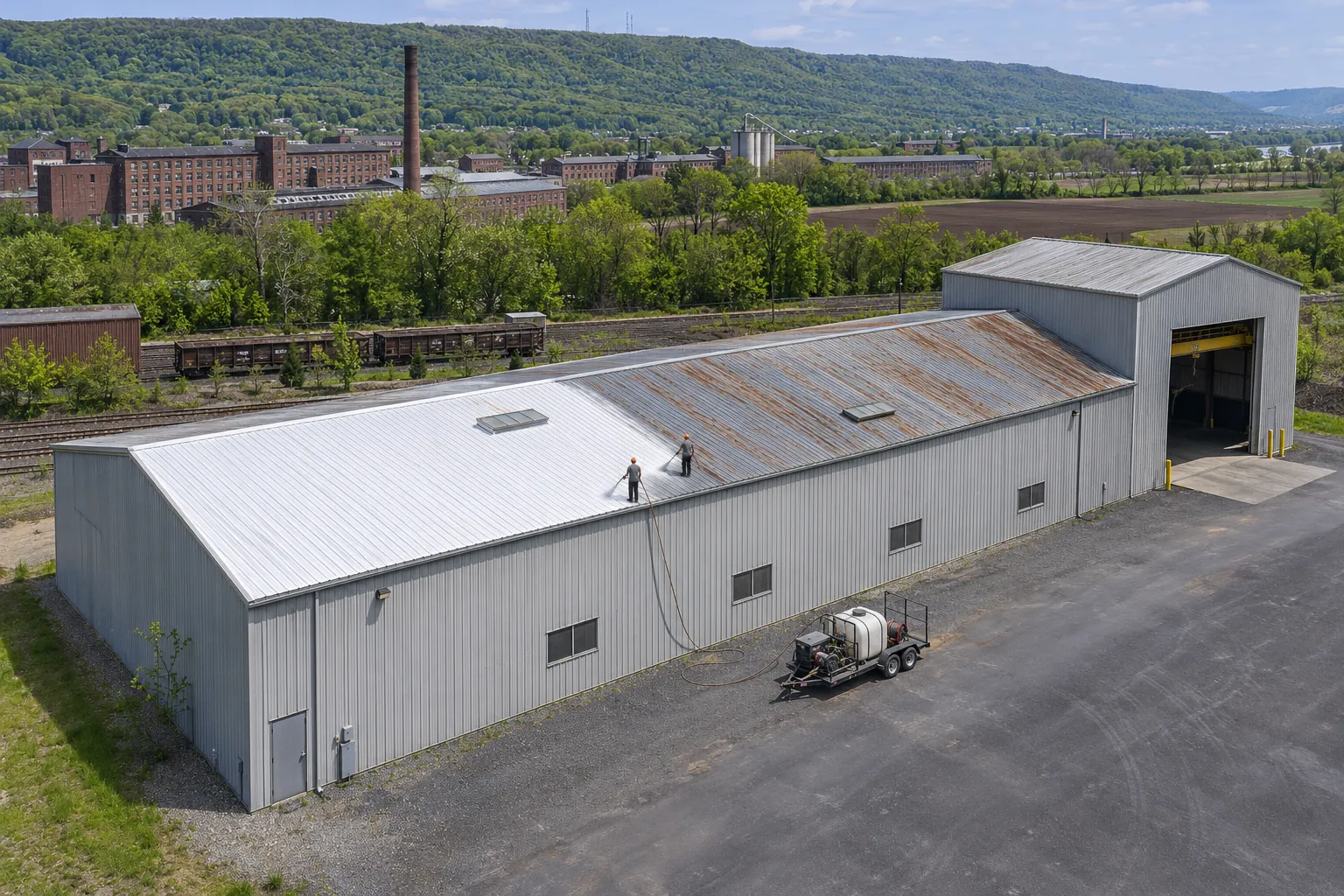
As a Collingdale metal roof coating contractor, we look at metal roofs from below as well as above before deciding what coating can fix.
Collingdale metal roof coating starts inside the building as often as on top of it. Many shops and storage buildings have bare steel overhead, and drips on cold mornings can come from condensation instead of rain.
Where we can reach the underside, we look for rust trails, wet purlins, and daylight at laps, then compare them with the stains and the weather. That comparison keeps owners from paying for coating to fix a drip that ventilation would solve.
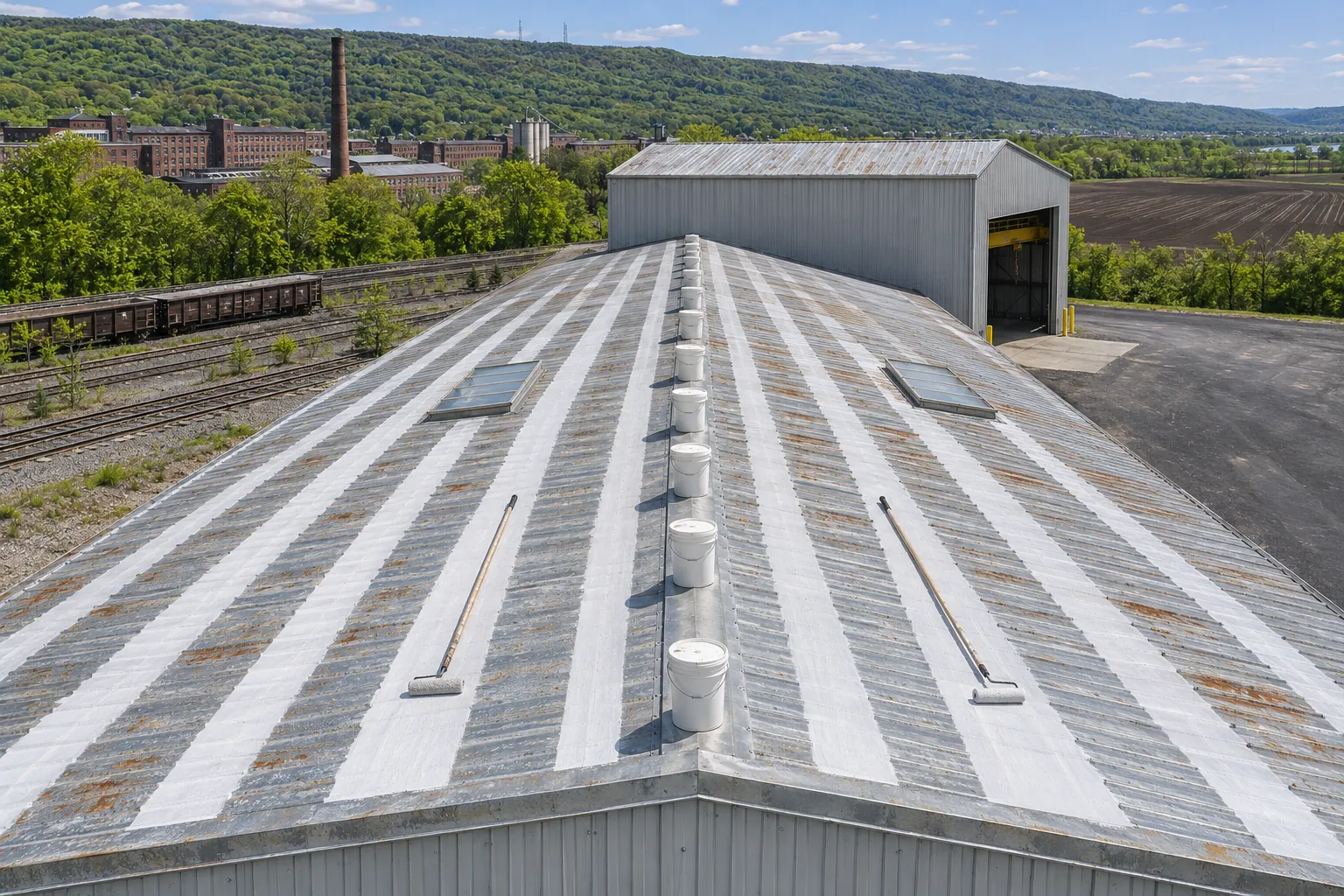
From below, a metal roof shows a lot. These pairs connect what you see inside to what is on the panels.
Drips fall on cold, clear mornings with no rain in the forecast.
Panels are dry on top; warm indoor air is condensing on the bare steel underneath.
Orange streaks run along purlins and down the wall girts.
Water enters at screw holes above, so the fasteners need replacing before coating.
Small spots of light show through the roof when the lights are off.
Rust has eaten through at those points, and those panels get patched or replaced.
A vinyl-faced liner sags and feels heavy in one bay.
Insulation behind it is soaked from a long-running lap leak and has to come out.
Ice crystals or wet spots form on the inside of the roof on the coldest nights.
Bare steel is reaching the dew point inside, which points to insulation or ventilation, with coating handling only true leaks.
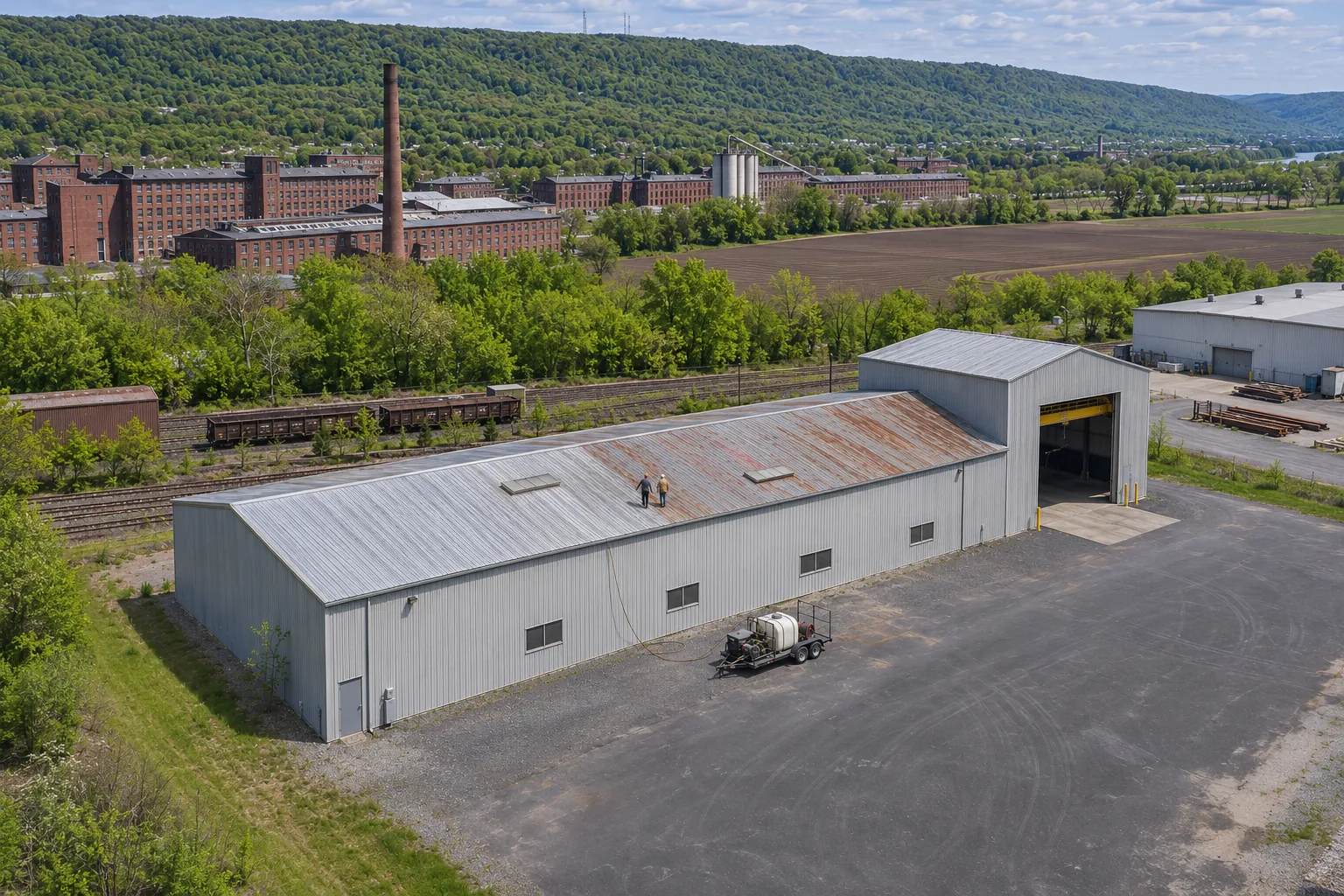
Once the source is confirmed as the roof, coating brings these gains to Collingdale buildings.
Coating closes the laps that let rain blow in, which ends the leaks traced from below.
Upsized fasteners hold the panels tight, and the coating seals every head.
Priming and coating cut off the air and water that keep surface rust growing.
Reflective coatings keep bare steel from heating the space below as much on sunny days.
Checking both sides first means coating pays for roof leaks, and ventilation handles condensation.
The underside findings shape which system goes on top.
Acrylic or silicone seals the roof; condensation inside is handled with ventilation work inside. Primer goes on every screw head before the coat.
Spray foam on top insulates the steel, which can reduce condensation caused by cold panels. The foam is finished with a protective topcoat.
Every screw that spins in its hole is swapped for a larger one into firm steel. Purlins with rusted-out holes get new screw locations.
Where condensation is the cause, more air movement or insulation inside fixes what coating on top leaves alone. We point out vents or fans that would help.
That pattern often points to condensation. We check both sides before recommending coating. Start with a ballpark range.
Get A Free EstimateUnderside findings come first, then the work on top.
We check the panels from above and, where reachable, the underside for rust trails, daylight, and wet insulation. Photos from below are matched to the panels above.
Drip locations are compared with weather and indoor conditions, so coating targets real leaks only. Indoor humidity sources are noted for the owner.
Rusted-through spots are patched, screws upsized, and wet insulation replaced. Replaced insulation matches what was there before.
Rust is primed, laps sealed, and the coating applied to the thickness the product requires. Laps over the old leak areas get extra coating build.
Do you also manage buildings closer to Reading? Here are the other towns we cover; for addresses outside them, call us or send us a message.
Office and retail roofs just west of Reading.
Wyomissing metal roof coatingMulti-building properties coated one roof at a time.
Downingtown metal roof coatingLow spots and drains checked before product choice.
Brookhaven metal roof coatingStorm and hail inspection before any coating.
Ridley Park metal roof coatingBecause moisture and corrosion often show from below first. Where access allows, we compare underside findings with outside leaks and old repairs. That tells us whether the roof is ready for coating or has hidden damage to fix first.
Timing gives it away. Drips on cold, dry mornings that stop by midday point to condensation on bare steel. Drips during or right after rain, at the same spots each time, point to a leak. Some buildings have both.
If the building needs to stay warmer or condensation is a problem, foam adds insulation and a new surface in one job. If the building is a storage shed that only needs to stay dry, a coating fixes the leaks for less.
Those spots are rusted through. Small areas get patched with new metal; panels with many holes get replaced. Coating goes over the repaired roof only after that.
Yes, where it is soaked. Wet insulation holds water against the steel and keeps the rust going. We open the liner in the affected bay, replace the insulation, and fix the leak above it.
The roof prep is the same: fasteners, laps, rust. What changes is the inside. A light coating keeps panels cooler in summer, but winter condensation still needs ventilation or insulation, which we flag in the scope.
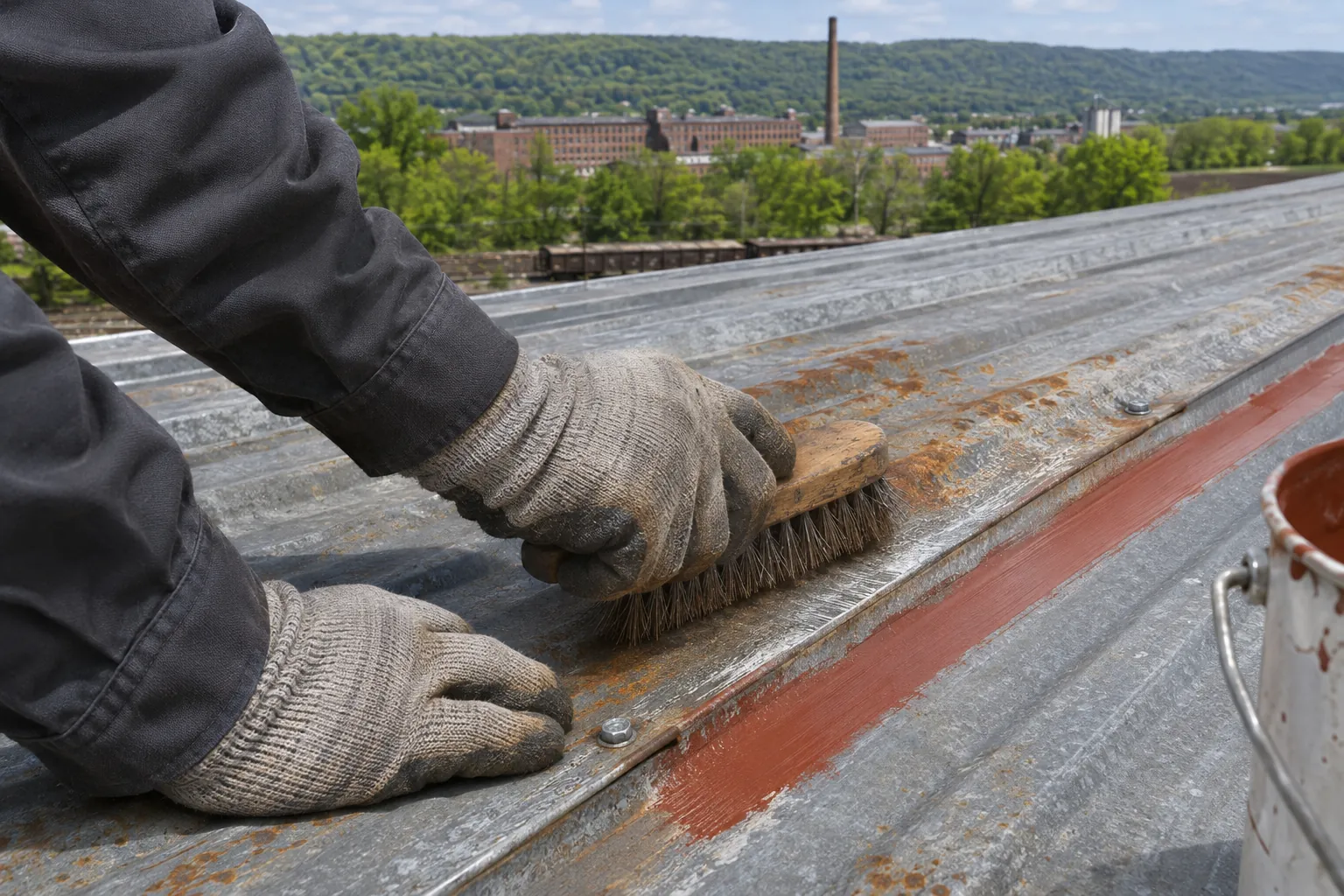
Tell us when the drips happen and where. We will check both sides of the roof and recommend the fix.