
Shingle Roof Coating on Commercial Buildings With Mansards
Inside The Building
Water stains on the wall inside a storefront mansard after driving rain.
On The Roof
Flashing where the mansard meets the flat roof behind it has opened at the corners.
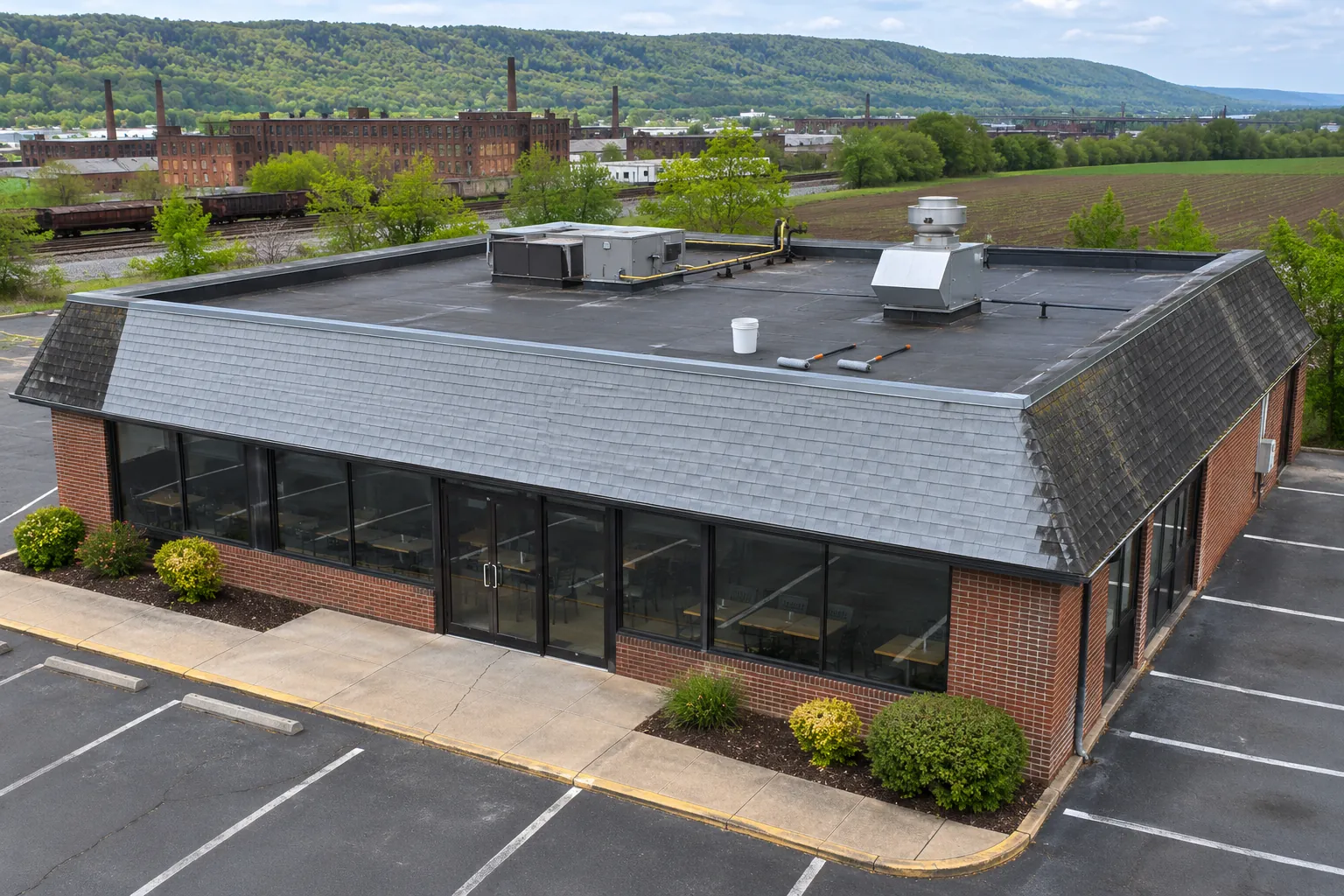
As a Reading shingle roof coating contractor, we coat commercial shingle roofs only after the shingles, flashing, and product approval check out.
Reading shingle roof coating is a narrow option. Most aging shingle roofs we inspect fall in the right-hand column.
| Roof Detail | Ready For Coating | Replace Instead |
|---|---|---|
| Shingle shape | Flat and still flexible | Curling, cupping, or cracking |
| Granules | Light loss, mat still covered | Bare mat showing in large areas |
| Deck | Firm when walked | Soft spots or sagging between rafters |
| Flashing | Tight at walls and valleys | Rusted or loose throughout |
| Product guidance | Coating maker approves shingles | No shingle approval on the label |
Shingle problems on commercial buildings show up inside first, then on the slope.
Water stains on the wall inside a storefront mansard after driving rain.
Flashing where the mansard meets the flat roof behind it has opened at the corners.
Sand-like grit in the downspout outlets and splash blocks.
Shingles are shedding granules and the mat underneath is starting to show.
Brown marks on plaster near the transept or along a nave wall.
Valley flashing or step flashing has failed, often more than the shingles themselves.
Drafts and a few drips during wind storms in one part of the building.
Shingle tabs have curled from heat, and curled shingles call for replacement.
A damp smell in the upper floor near the north side of an older office building.
Moss and debris hold water against shingles on the shaded slope, which speeds up wear and hides cracked tabs.
When a shingle roof qualifies, the coating plan is short and specific.
Only coatings whose makers approve them for asphalt shingles are considered, with their prep steps followed exactly.
Roof size, access, pitch, flashing repairs, and the number of penetrations drive the price more than the coating itself.
Coating fits a few flat, flexible shingle roofs; reshingling fits the many that are curling or bare.
Steep church roofs, small office buildings, and mansard faces over flat roofs are where coated shingles come up most.
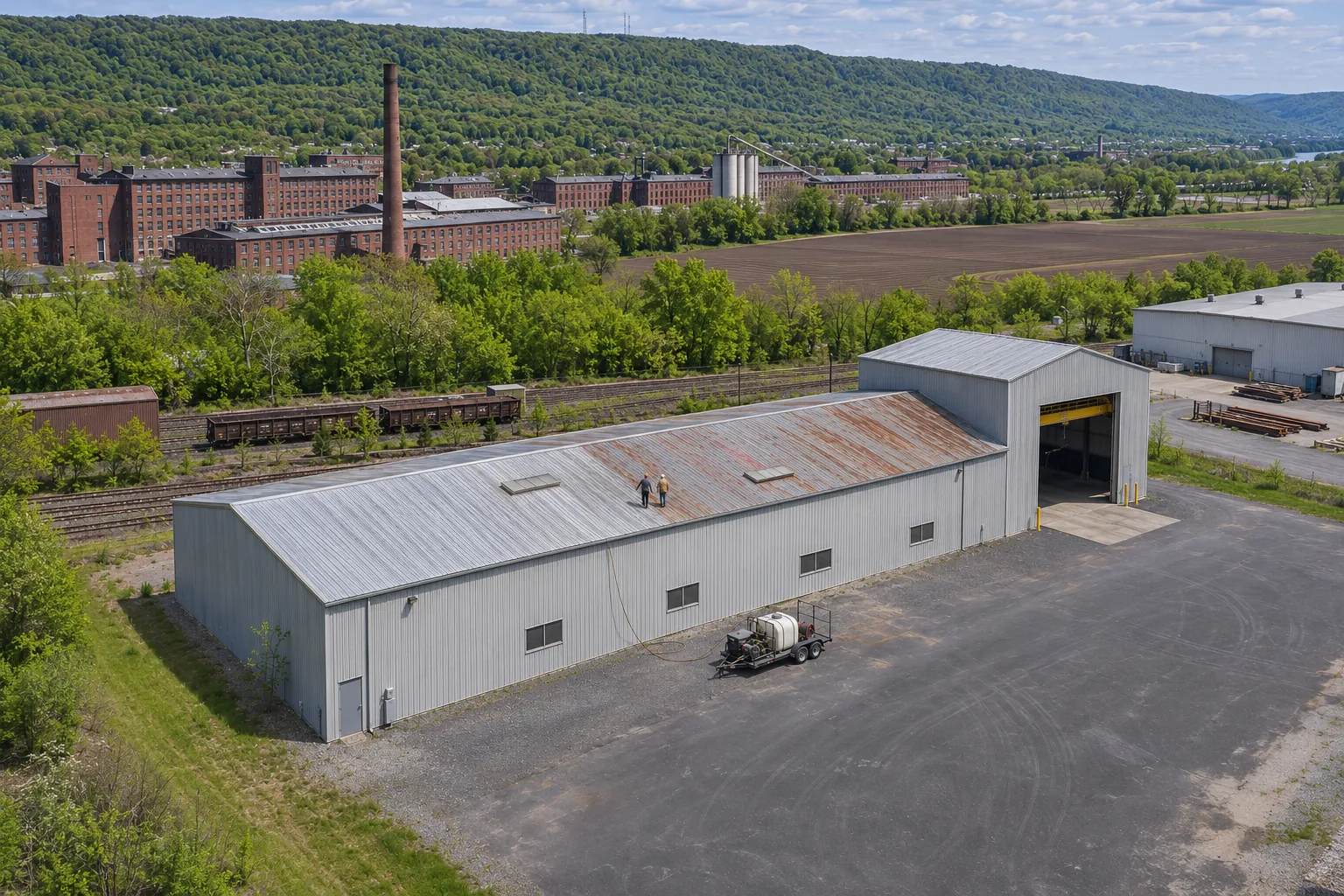
On the few shingle roofs that qualify, coating offers these gains.
A light coating reflects sun that dark, weathered shingles absorb.
The coating binds loose granules to the mat on shingles still in good shape.
Every qualifying job includes flashing repairs that stop the leaks owners actually notice.
Occupied buildings avoid the noise and debris of stripping shingles.
Valley flashing and gutters are cleared and repaired so water leaves the coated slope quickly.
We will tell you plainly whether coating or new shingles fits. Start with your roof size for a ballpark range.
Get A Free EstimateShingle coating has a strict gate at the start. Most of the work happens after a roof passes it.
We check shingle flexibility, granule cover, deck firmness, and flashing, and confirm the product allows shingle use.
Valleys, step flashing, and wall flashing are fixed, and any broken shingles are replaced.
Moss, dirt, and loose granules are cleaned off following the coating maker instructions.
The coating goes on at the rate the maker specifies, avoiding the overlaps that let shingles shed water.
Many commercial buildings with shingle sections also have metal or flat roofs.
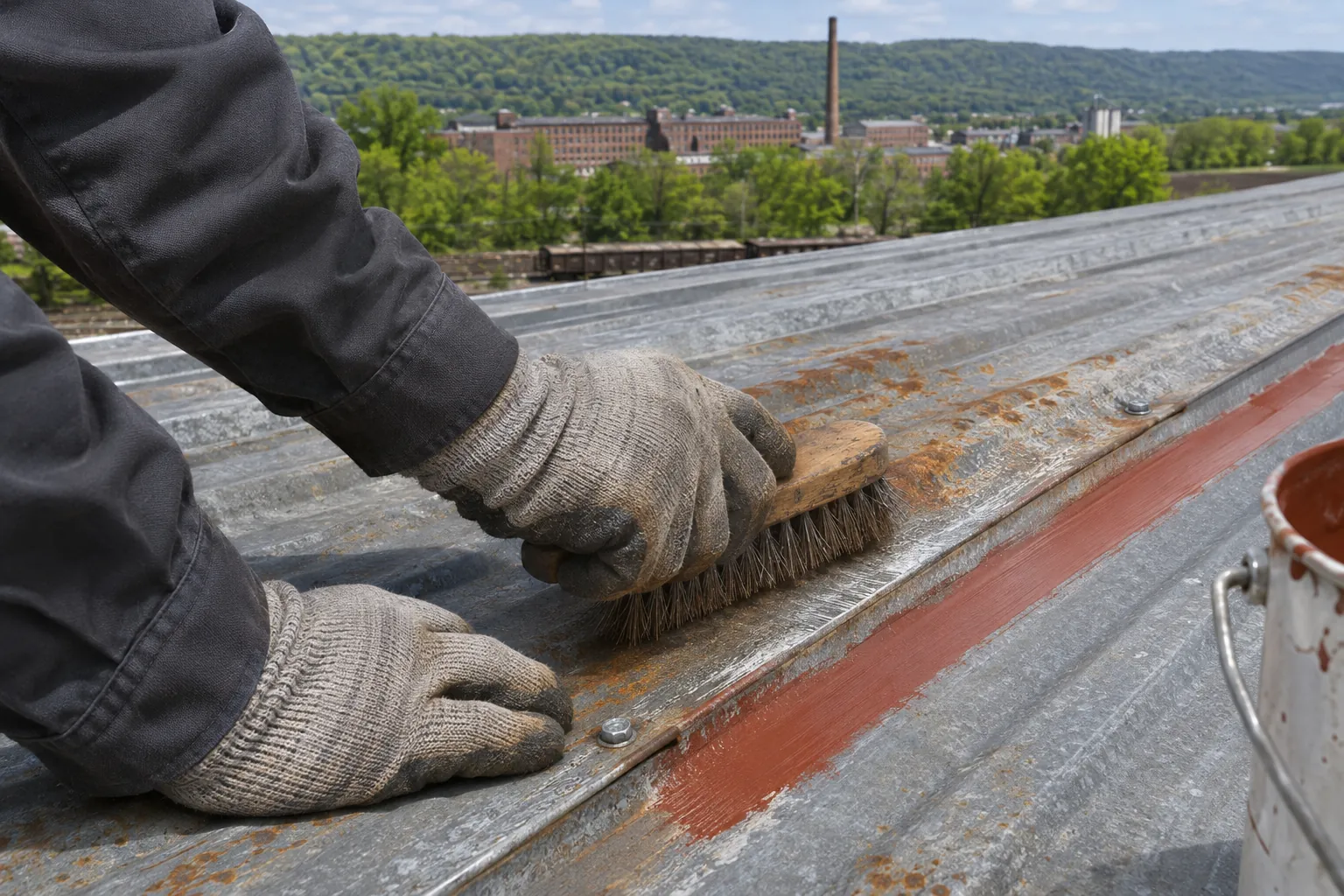
Metal roofs over the same building get their own fastener, lap, and rust work.
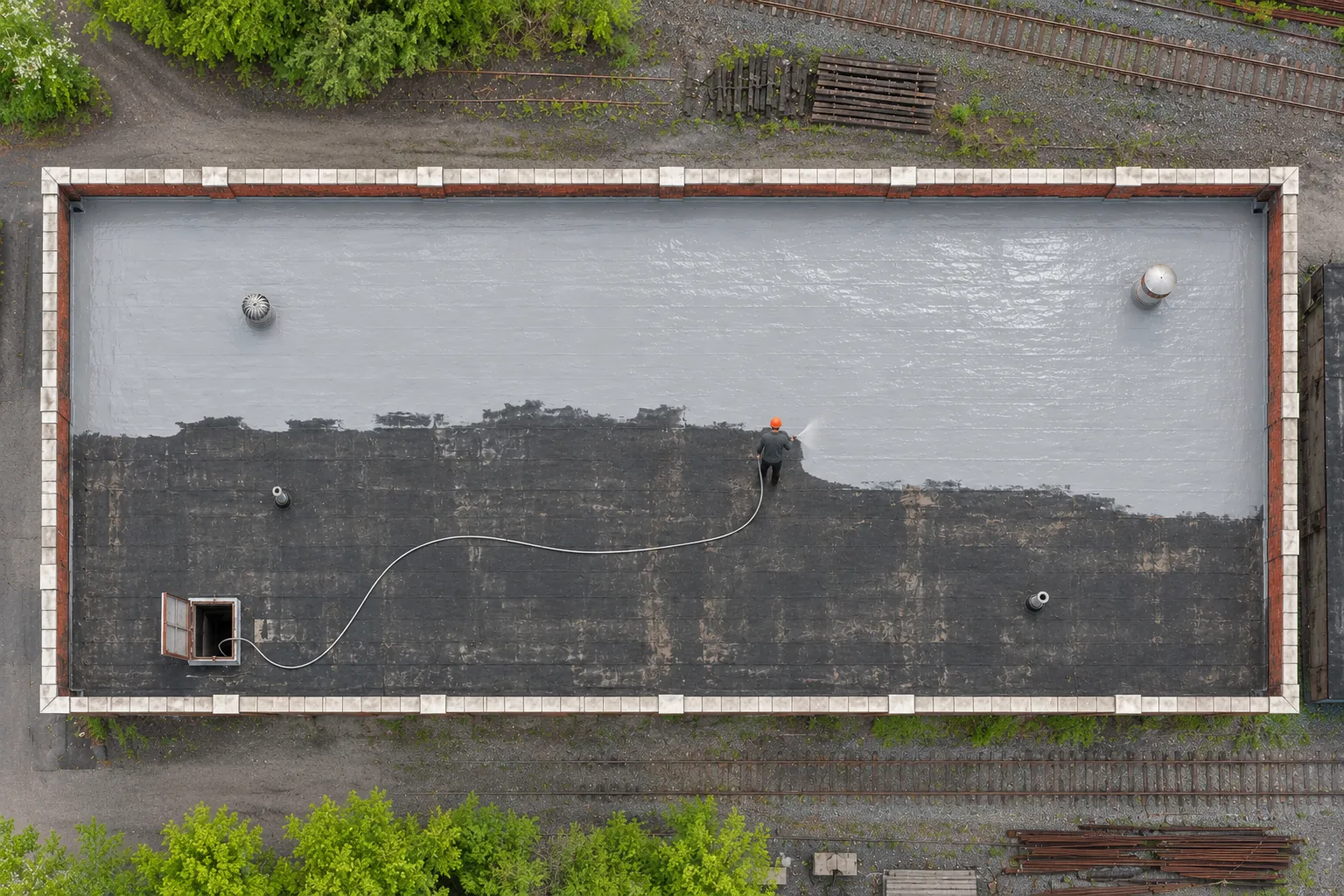
Flat roofs behind a mansard often hold water and suit silicone.
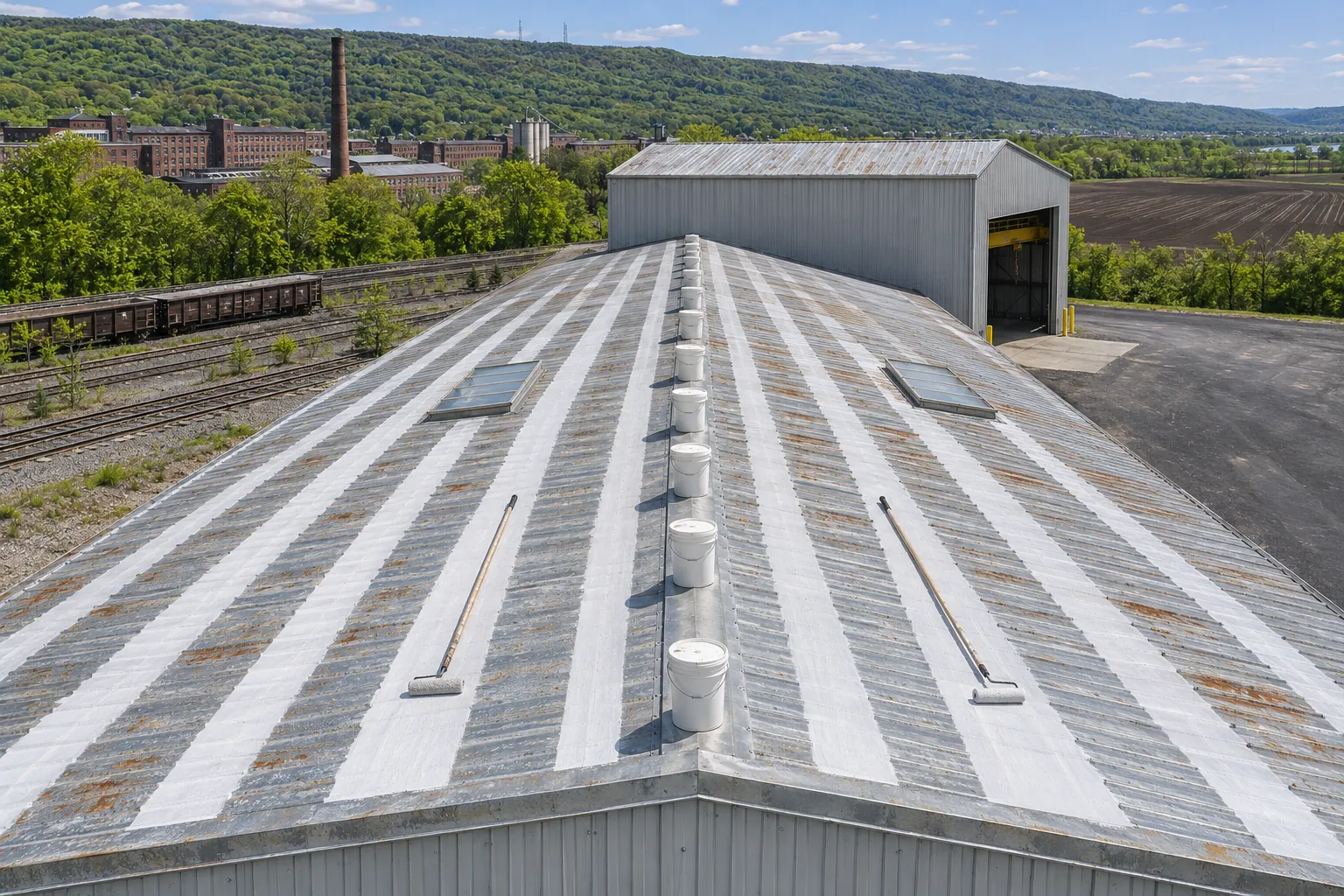
Pitched metal additions next to shingles can take acrylic.
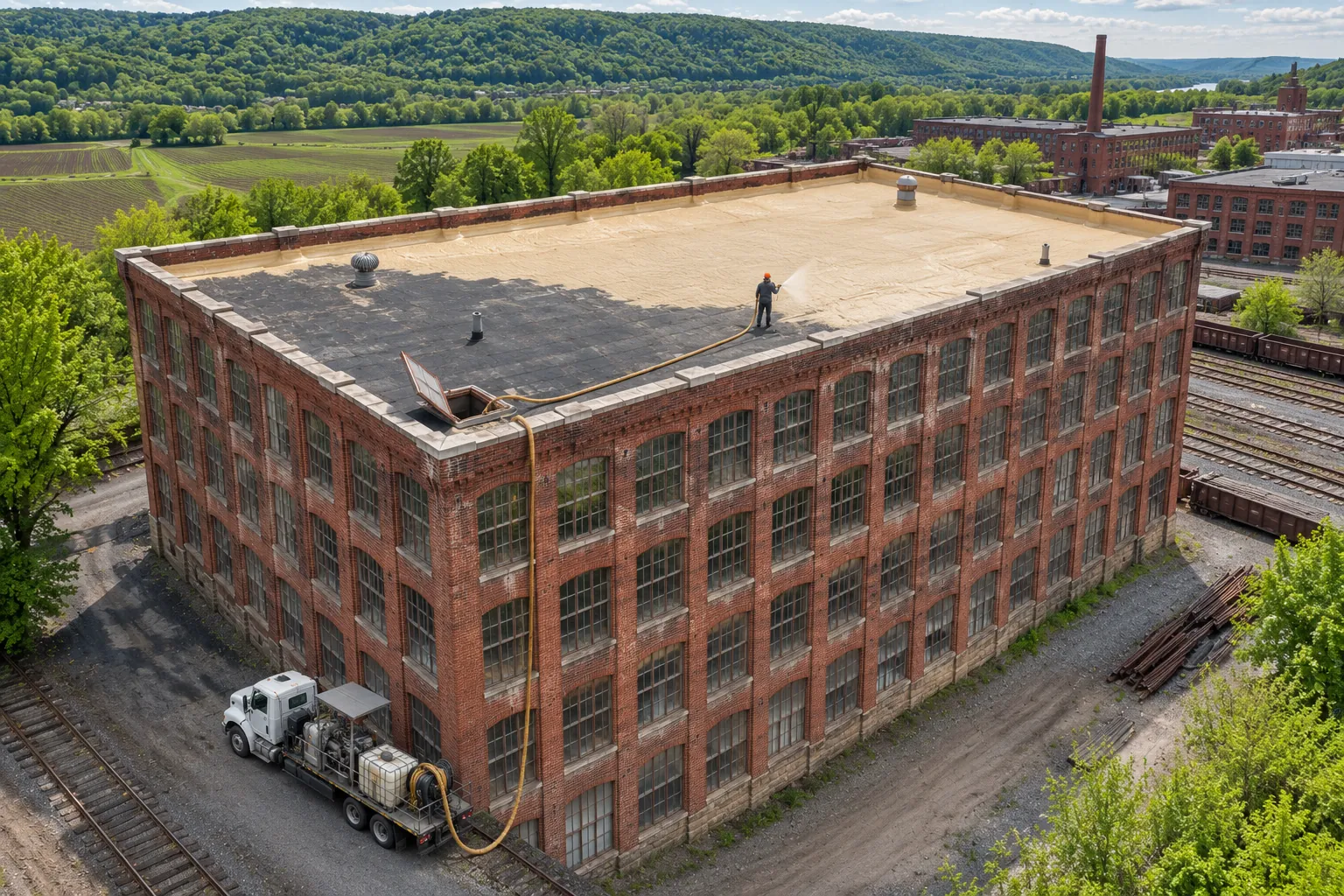
Sections needing insulation as well as a new surface can take foam.
No. We inspect brittleness, granule loss, and flashing, then check whether the coating product supports shingle use at all. Shingles or decking that have deteriorated need replacement even if some sections would accept a coating.
Compatibility comes first. For planning, coating runs about $2.50 to $4.00 per square foot of roof, against about $5 to $8 for replacement. Size, access, coating type, thickness, coats, penetrations, flashing, and prep all move the price.
Curling shingles need a replacement assessment. Coating will not flatten or renew them. We look at the extent of damage, attic ventilation, and moisture below, and any coating proposal would need clear product guidance.
On a qualifying shingle roof, coating life comes down to thickness, product, and exposure. It buys time on shingles that are still flat and flexible; on worn shingles it adds little. We explain which situation your roof is in after the inspection.
When shingles curl, crack, or show bare mat across large areas, or when the deck is soft. Reshingling also makes sense when flashing has failed throughout, since it all gets replaced together.
Always. Most leaks on commercial shingle roofs trace to flashing at walls, valleys, chimneys, and roof-to-wall joints rather than the shingles. We repair those details first, and on many buildings that repair is what actually stops the leak.
Yes, as two separate systems. The flat roof behind a mansard usually takes silicone or acrylic, while the mansard shingles get a product approved for asphalt. The joint where the two meet gets new flashing before either coating goes on.
Send a few photos and the roof size. We will tell you honestly whether coating or new shingles fits.