
Will Spray Foam Stop Leaks in a Metal Roof?
Inside The Building
Leaks at many screw rows and laps, plus a building that is cold in winter.
On The Roof
Foam covers every fastener and lap in one layer, once loose panels are fastened down.
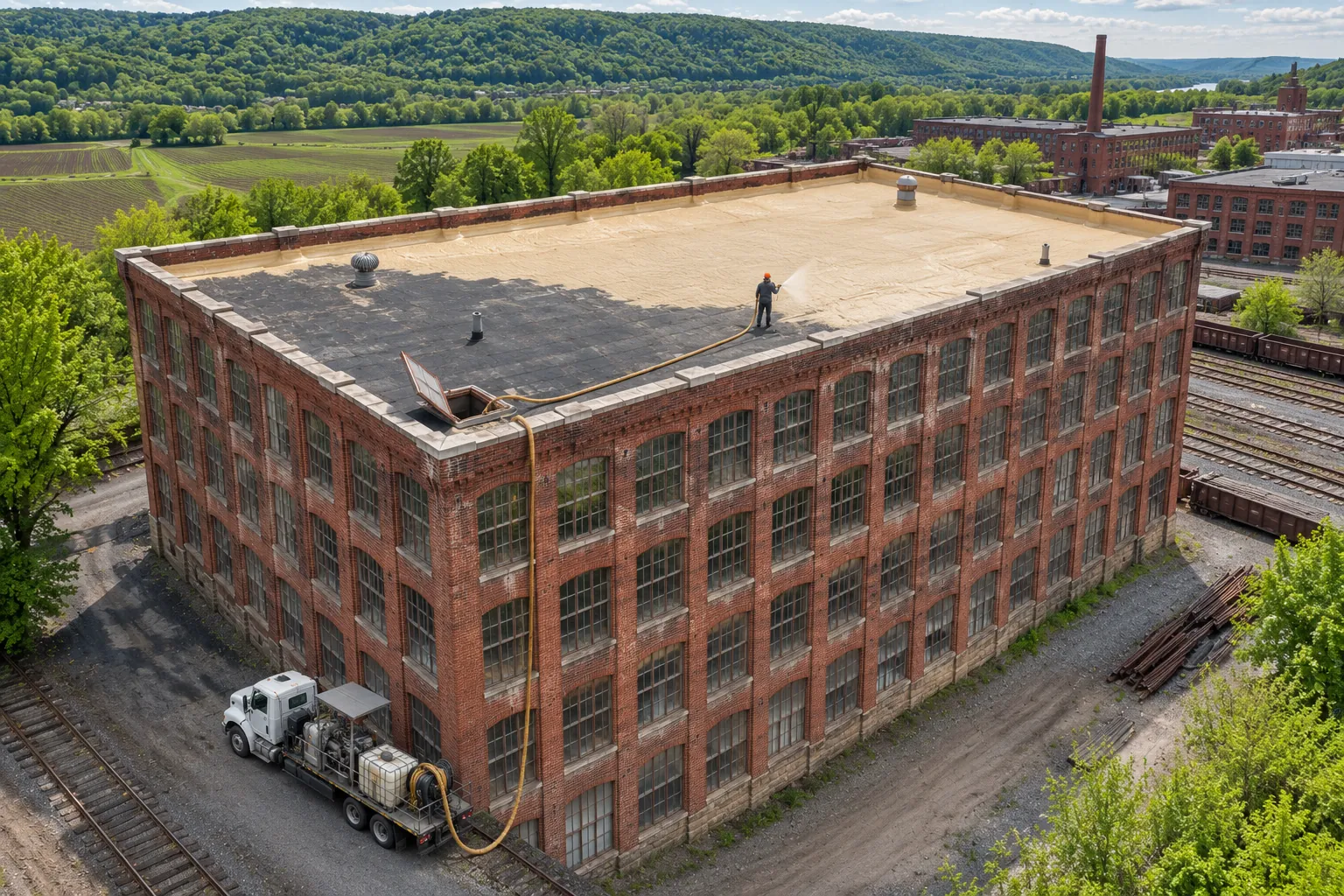
As a Reading spray foam roofing contractor, we spray polyurethane foam over metal and flat commercial roofs, then protect it with a coating.
Reading spray foam roofing fits roofs with a dry, attached deck and owners who want insulation. Here is what we check first.
| Roof Detail | Ready For Foam | Fix First Or Rethink |
|---|---|---|
| Deck | Dry and attached to the frame | Wet insulation or loose panels |
| Building use | Air intakes that can be shut or shielded | Intakes that must run during spraying |
| Parking nearby | Cars and trucks can be moved or covered | Lots that cannot be cleared |
| Drainage | Slope can be built into the foam | Drains blocked by structural sag |
| Old roof | Metal or single-ply in fair shape | Layers of failed roofing stacked up |
Foam solves some roof problems well and leaves others alone. These pairs show which is which.
Leaks at many screw rows and laps, plus a building that is cold in winter.
Foam covers every fastener and lap in one layer, once loose panels are fastened down.
Drips from the underside of panels on cold mornings in an unheated shop.
Foam on top insulates the steel, which can reduce condensation when the source is cold panels.
Water stands near the middle of a flat roof and the ceiling below is stained.
Foam can be sprayed thicker toward the low area to build slope back to the drains.
A foam roof that once looked tan now shows darker, rough patches.
The topcoat has worn through and UV is eroding the foam, so it needs repair and recoating.
A few small leaks appear after a summer hailstorm on a foam-covered building.
Hail cracked the topcoat and dented the foam, and those spots need sealing and a fresh coat before water soaks in.
Foam jobs differ by what goes under the foam and what goes on top.
Foam fills the panel profile and covers screws and laps, after loose panels are fastened and rust is treated.
On a dry, attached flat roof, foam goes over the old surface after blisters and wet spots are cut out.
Silicone handles ponding; acrylic recoats easily. Either one shields the foam from sunlight.
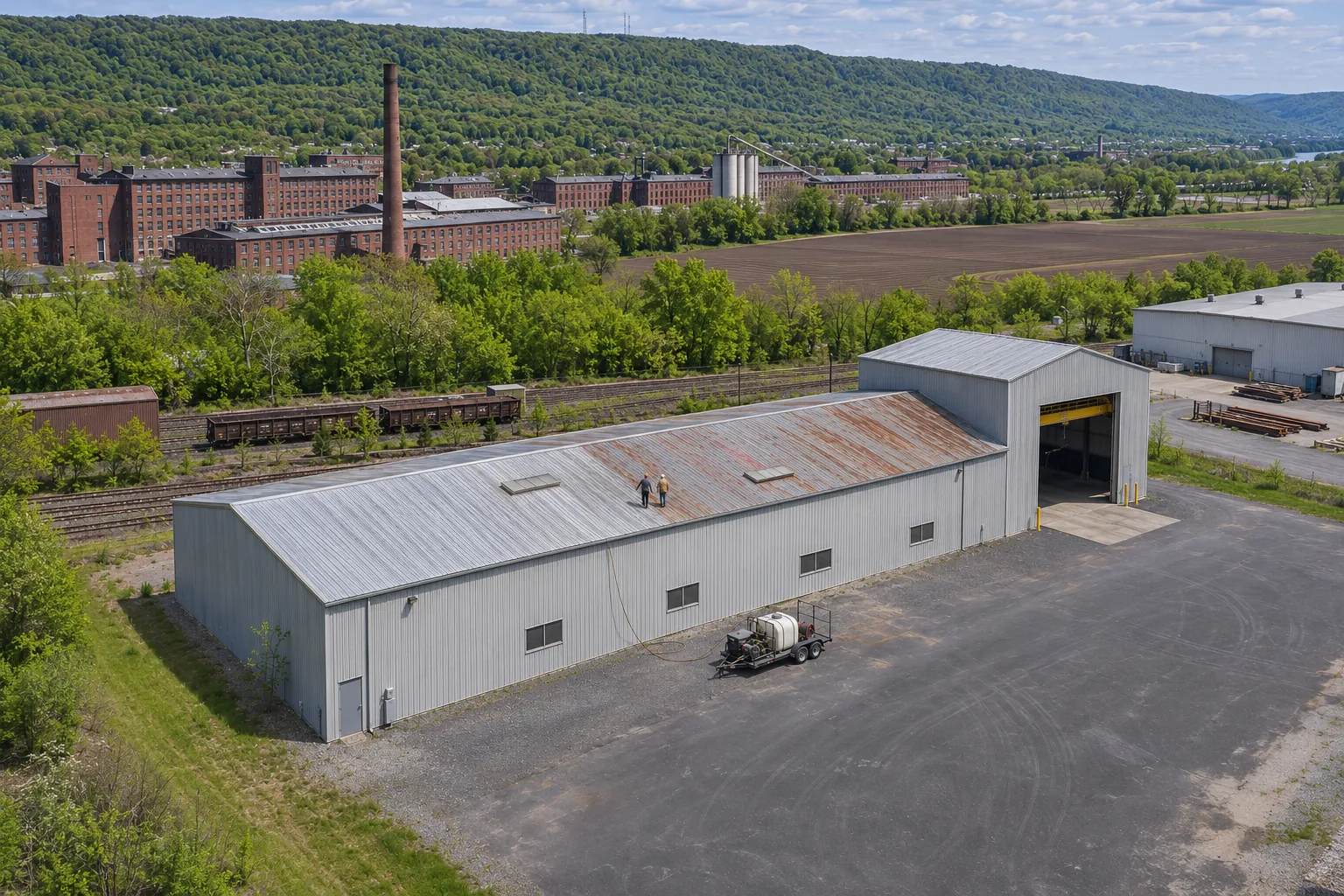
Spray foam brings several gains when the deck below is in good shape.
Foam adds a continuous insulating layer without opening the ceiling inside.
One sprayed layer covers every lap, screw, and flashing edge.
Extra thickness at low spots moves water toward drains.
When the topcoat wears, it is cleaned and recoated over the same foam.
Foam can tackle both at once if the deck is dry. A ballpark range is the easiest first step.
Get A Free EstimateFoam work moves fast once it starts, so planning and protection take most of the effort.
We check deck moisture, panel attachment, intakes, and nearby vehicles, then map where foam thickness should vary.
Loose panels are fastened, wet areas replaced, and intakes, windows, and vehicles masked or moved.
Foam goes on in calm, dry conditions, building thickness toward drains and around curbs.
A silicone or acrylic topcoat goes on right after the foam, sealing it from sun before it weathers.
Foam is one route. Some roofs only need a coating.
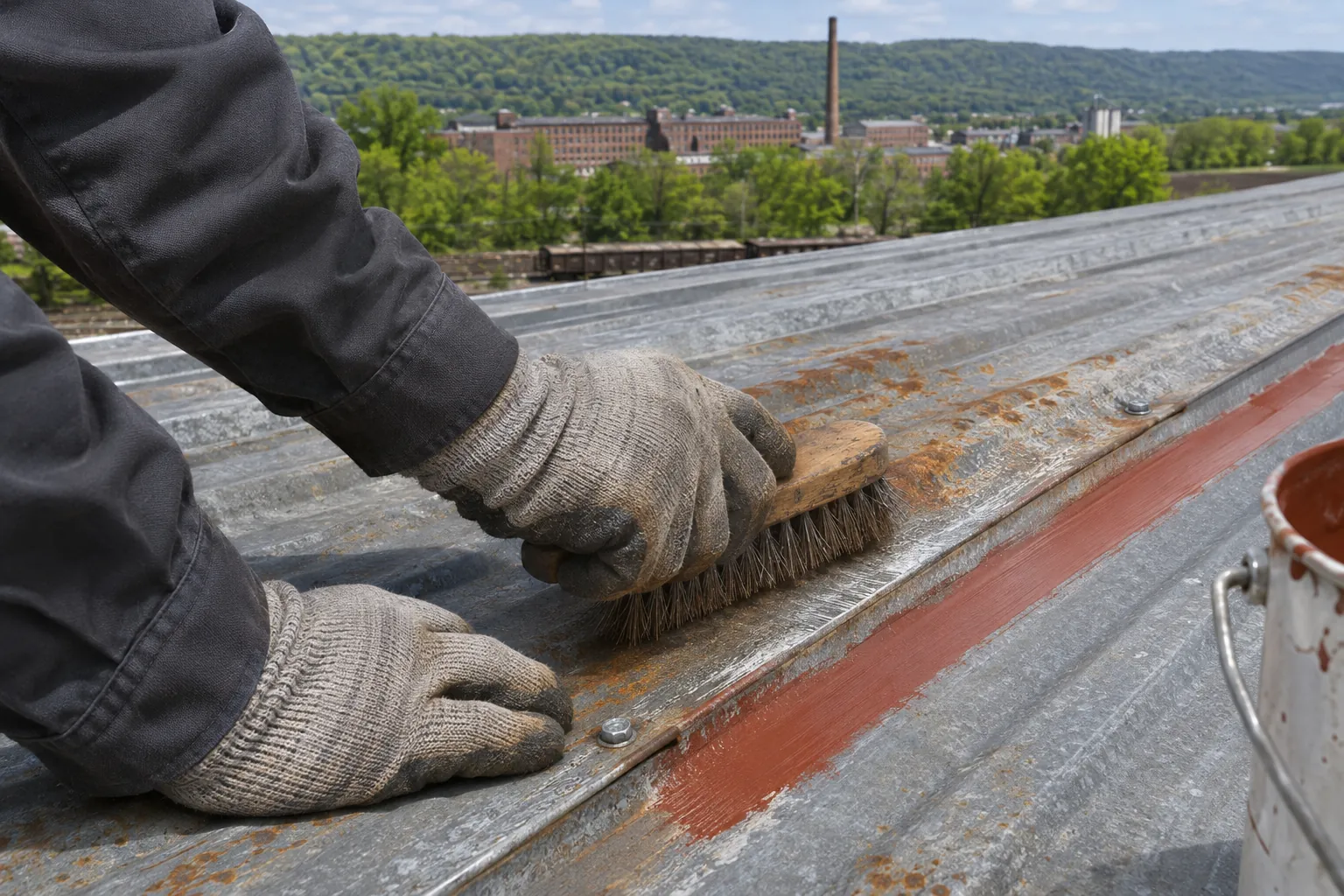
If the building is warm enough already, a metal coating fixes the leaks for less.
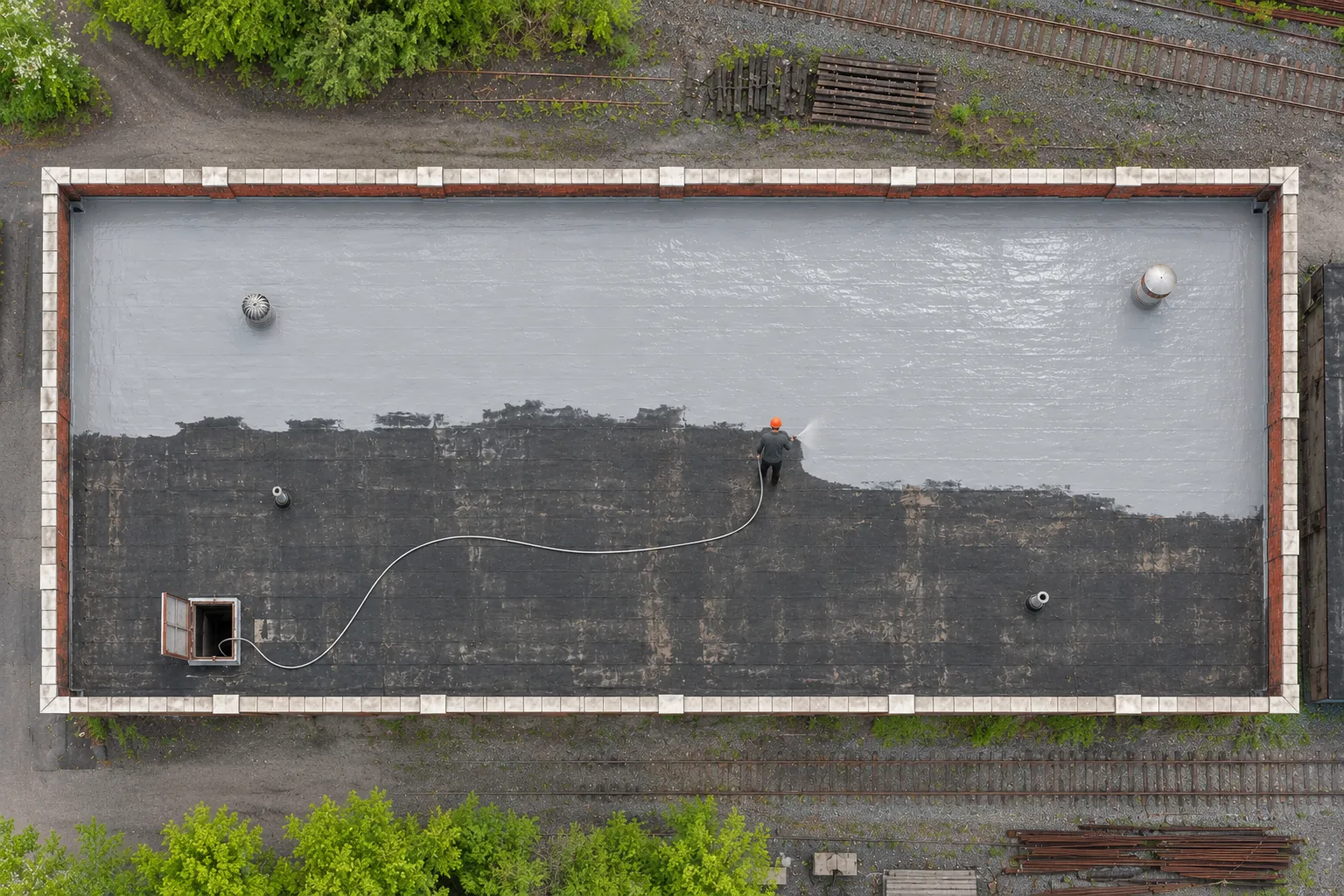
Flat roofs with ponding but no insulation need can take silicone alone.
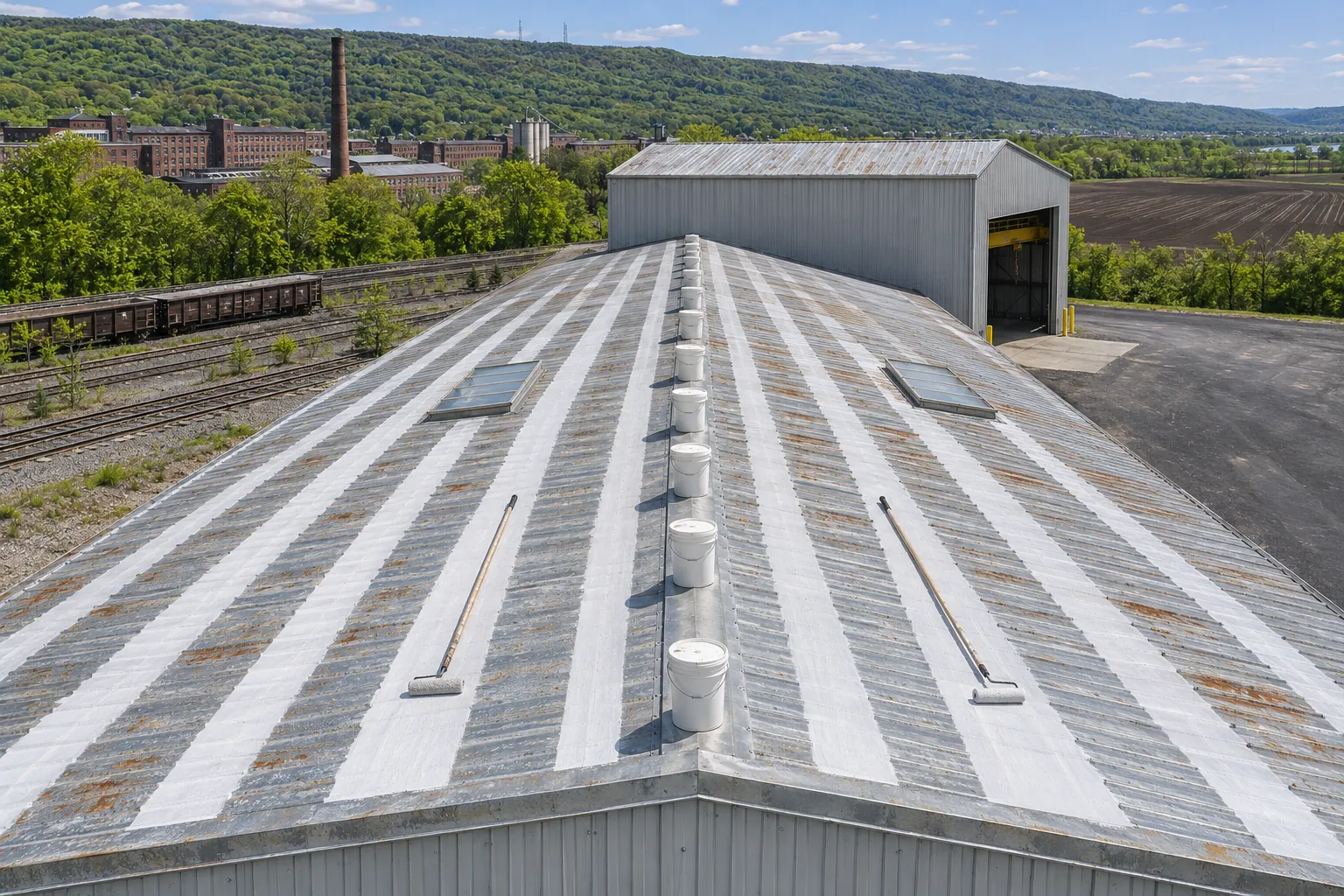
Pitched steel roofs that drain well can skip foam and take acrylic.
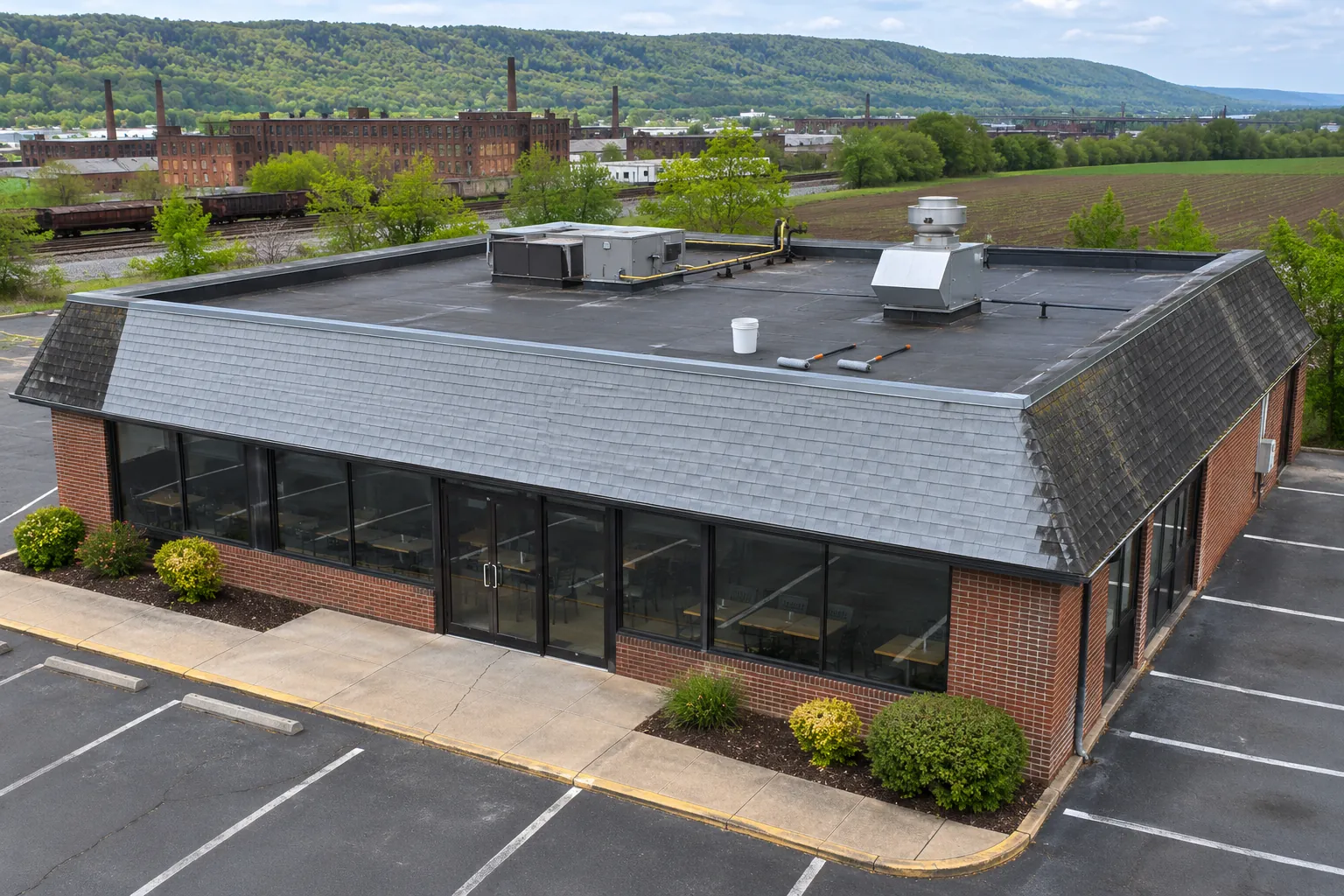
Shingle parts of the building stay out of the foam area and get their own check.
Foam should never be used to fix loose panels. We first confirm the panels and supports hold, trace the leaks, and replace wet materials. The foam system also needs proper flashing, a protective coating, and the right weather to cure.
When punctures, exposed foam, or moisture have damaged the system. We separate firm foam from areas that need removal and check that the new topcoat matches the old one. A recoat schedule helps, but it never sets a fixed lifespan.
Insulation and a continuous surface on one side; spraying controls and future recoats on the other. We look at intakes, nearby vehicles, and equipment access before planning. Overspray and the space below matter as much as a dry deck when the bakery stays open.
A foam roof lasts as long as its topcoat protects it. With a sound coating renewed on schedule, foam keeps working for many years. Once UV reaches bare foam it erodes, so inspections after storms and periodic recoats matter most.
Yes, once we know why it leaks. Loose screws get fastened, rusted-through spots get patched, and wet insulation comes out. Then foam covers every seam and screw in one layer, which is what makes it effective on leaky steel roofs.
Thickness is set by the insulation goal, the slope needed to drain, and the product requirements. We map it before spraying, building more at low spots and around drains, and check depth as the foam goes on so the finished roof sheds water.
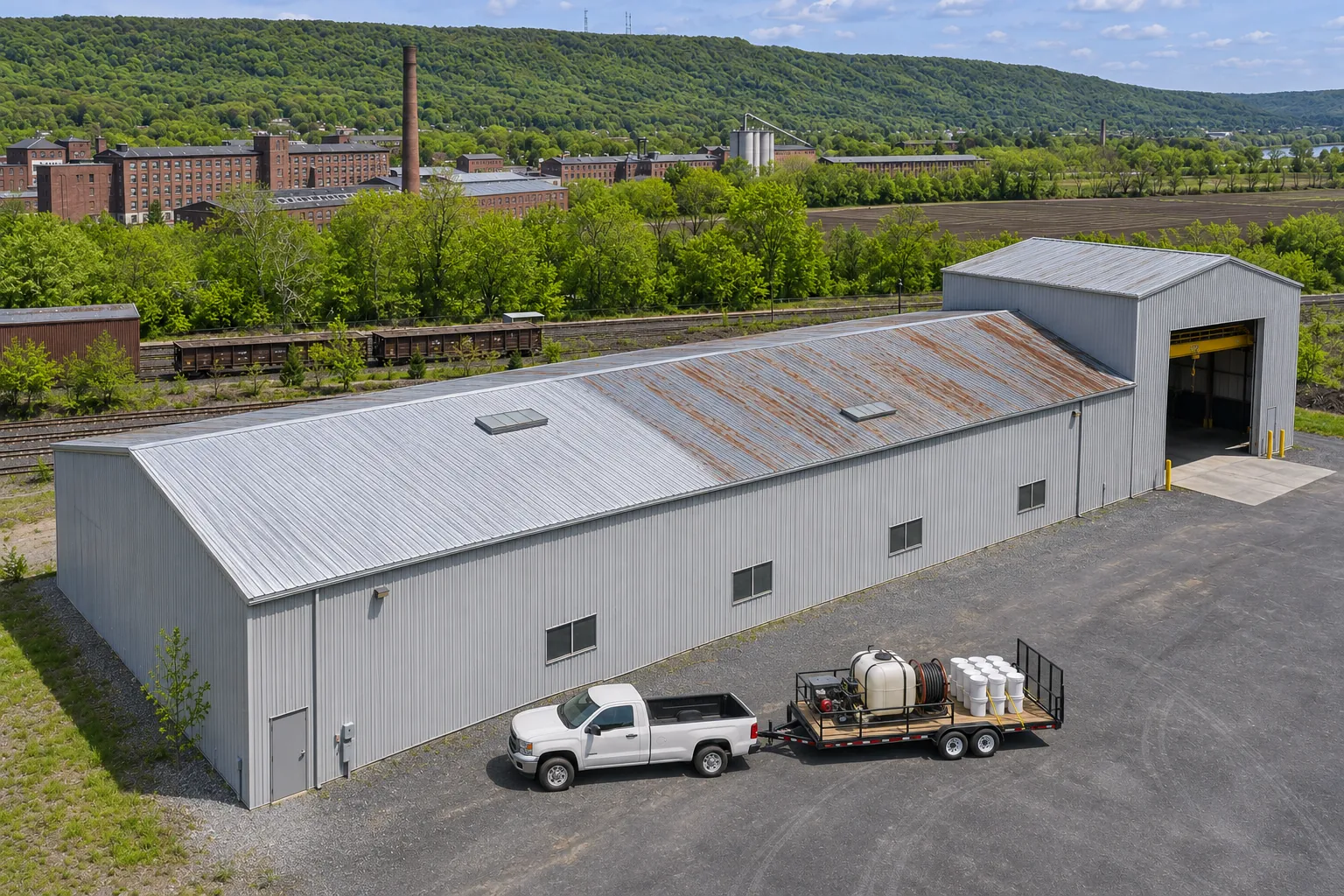
Tell us the roof type and how the building is used. We will check the deck and plan the foam.