
Low Spots on a Metal Roof Near Drains
Inside The Building
A stain grows under one drain and spreads after every storm.
On The Roof
The drain sits above the low point, so water collects around it and works into the seams.
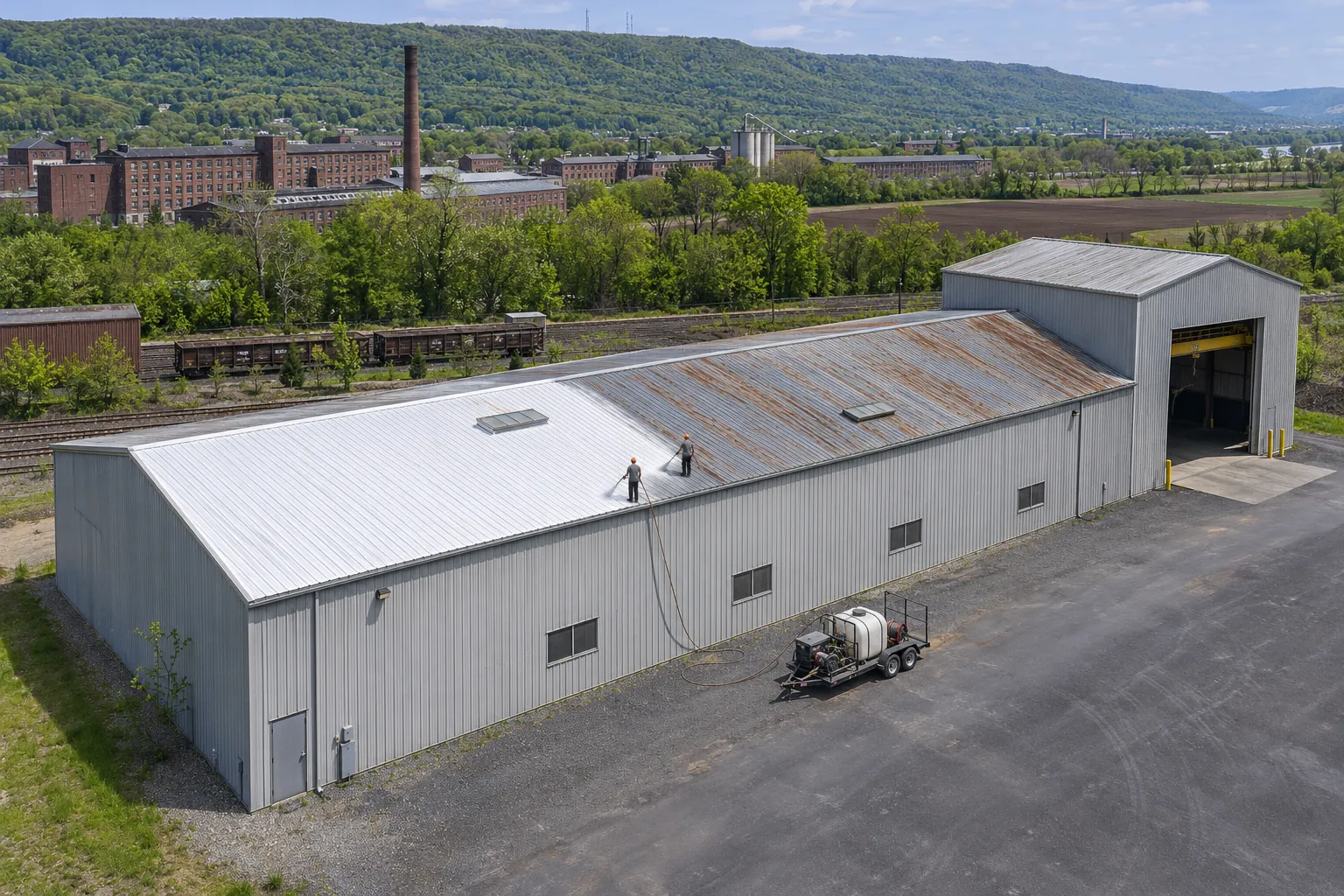
As a Brookhaven metal roof coating contractor, we fix drainage and low spots on commercial roofs first, then choose a coating that suits what is left.
Brookhaven metal roof coating starts with where the water goes. On low-slope roofs, debris in drains, sagging panels, and roof details that block runoff leave water sitting for days. We trace each low spot to its cause, fix what can be fixed, and only then pick a product rated for the conditions left behind.
Low areas that drainage work cannot fully clear get a coating rated for that water.
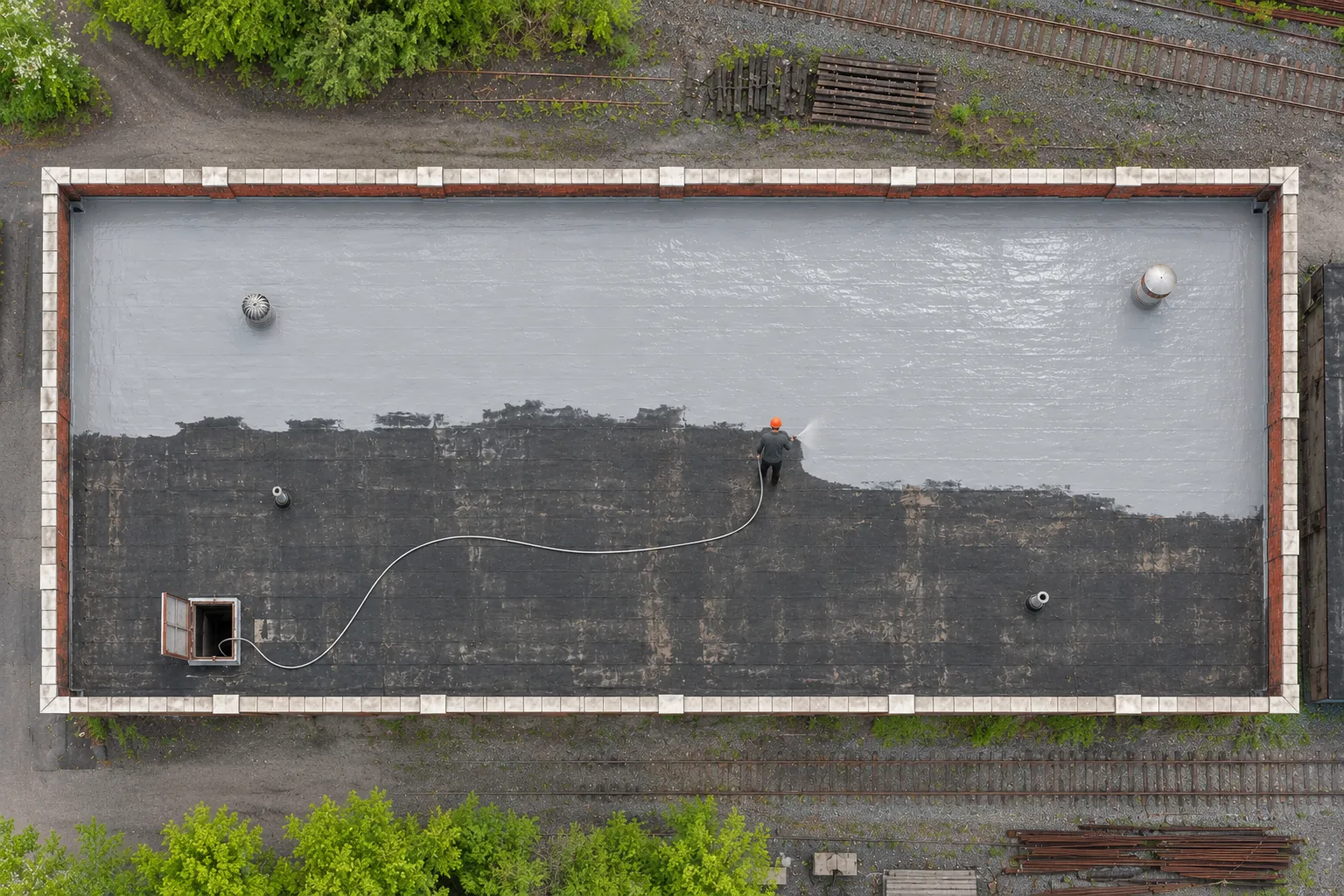
Standing water leaves clues inside and out. These pairs show where they lead.
A stain grows under one drain and spreads after every storm.
The drain sits above the low point, so water collects around it and works into the seams.
A dark stain shows in the ceiling a day or two after rain ends.
Ponding leaves a ring of dirt, and the water slowly finds a seam at the low point.
Water sheets down the wall instead of coming out the downspouts.
Gutters and downspouts are clogged or undersized for the roof area they serve.
A dip in the ceiling line under one bay of the building.
Panels or deck have deflected between supports, holding water that adds more weight.
Leaks show up along one wall only during snowmelt.
Meltwater backs up behind ice at the gutter or scupper and runs into the low end of the panels.
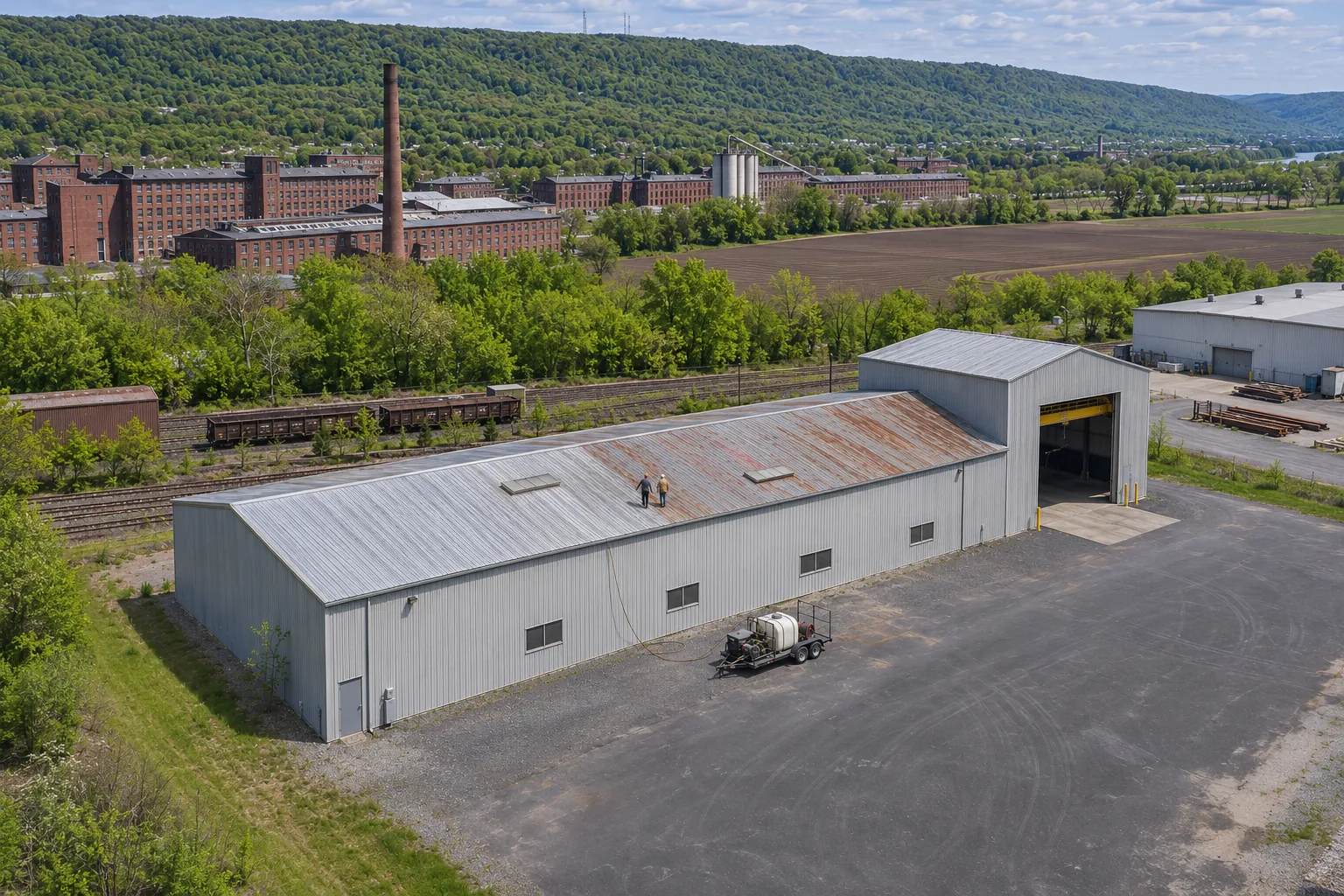
With drainage handled first, coating a Brookhaven roof brings these benefits.
Cleared drains and fixed low spots stop water from sitting on seams.
Silicone handles the minor ponding that remains on low-slope sections.
A continuous coating closes the seams that ponding water used to find.
Wet insulation found under low spots is replaced before coating.
Extra coating build at low spots and drains adds protection where the roof works hardest.
Drainage findings narrow down the coating choice.
Strainers, bowls, and leaders are cleared and checked so water leaves the roof before any product goes on. Leaders and downspouts are run with water after clearing.
Low-slope areas that hold some water after repairs take silicone rated for ponding. Fabric goes into seams at each low spot first.
Sections that drain within hours take acrylic, kept clear of the silicone areas. The edge between systems is sealed and recorded.
Small low spots can be built up with tapered material before coating, so water drains toward outlets. Tapered areas are coated along with the rest of the field.
We find out why before we pick a coating. Send the roof size and where the water collects for a ballpark range.
Get A Free EstimateDrainage work sits between the inspection and the coating on every low-slope roof.
We map low spots, check drains and gutters, and test insulation under areas where water sits. Insulation cores show whether low areas are wet underneath.
Drains, scuppers, and downspouts are cleared or rebuilt, and flow is checked with water. Water is run through each outlet to confirm flow.
Seams at low points are repaired, and wet insulation is cut out and replaced. Seams at drains get fabric before the field coat.
Silicone goes on the low-slope areas and acrylic on steeper ones, each to its specified thickness. Thickness is checked most closely at the low spots.
Need a roof looked at somewhere else near Reading? We cover these towns as well; outside them, call us or send us a message.
Office and retail roofs just west of Reading.
Wyomissing metal roof coatingMulti-building properties coated one roof at a time.
Downingtown metal roof coatingStorm and hail inspection before any coating.
Ridley Park metal roof coatingUnderside checks to sort condensation from leaks.
Collingdale metal roof coatingLow spots need a drainage check before any product is chosen. We look for debris, panel deflection, and roof details that block runoff, and check the surrounding materials for moisture. The coating must suit what remains, and drainage defects stay a separate repair.
A silicone coating rated for ponding tolerates some standing water. Acrylic softens under it over time. Either way, we fix the cause of long-standing water first, because no coating corrects a sagging deck or a blocked drain.
Coating over a drain that sits too high or flows poorly leaves water on the roof. Rebuilding or resetting the drain first lets the roof shed water so the coating works as intended.
A lot. Clogged or undersized gutters back water onto the low end of the panels and down the walls. We clear and check them during every inspection.
Sagging between supports holds water and adds weight. A coating cannot change that, so we flag it for structural review and repair before coating the area.
Ice at gutters and drains holds meltwater on the low end of the roof, where it backs into laps and screw rows. Clearing outlets, checking heat and drainage at those edges, and sealing the laps before coating addresses it.
Silicone rated for ponding water, applied over clean, primed seams and dry insulation. Steeper parts of the same roof can take acrylic, and we keep the two systems separate.
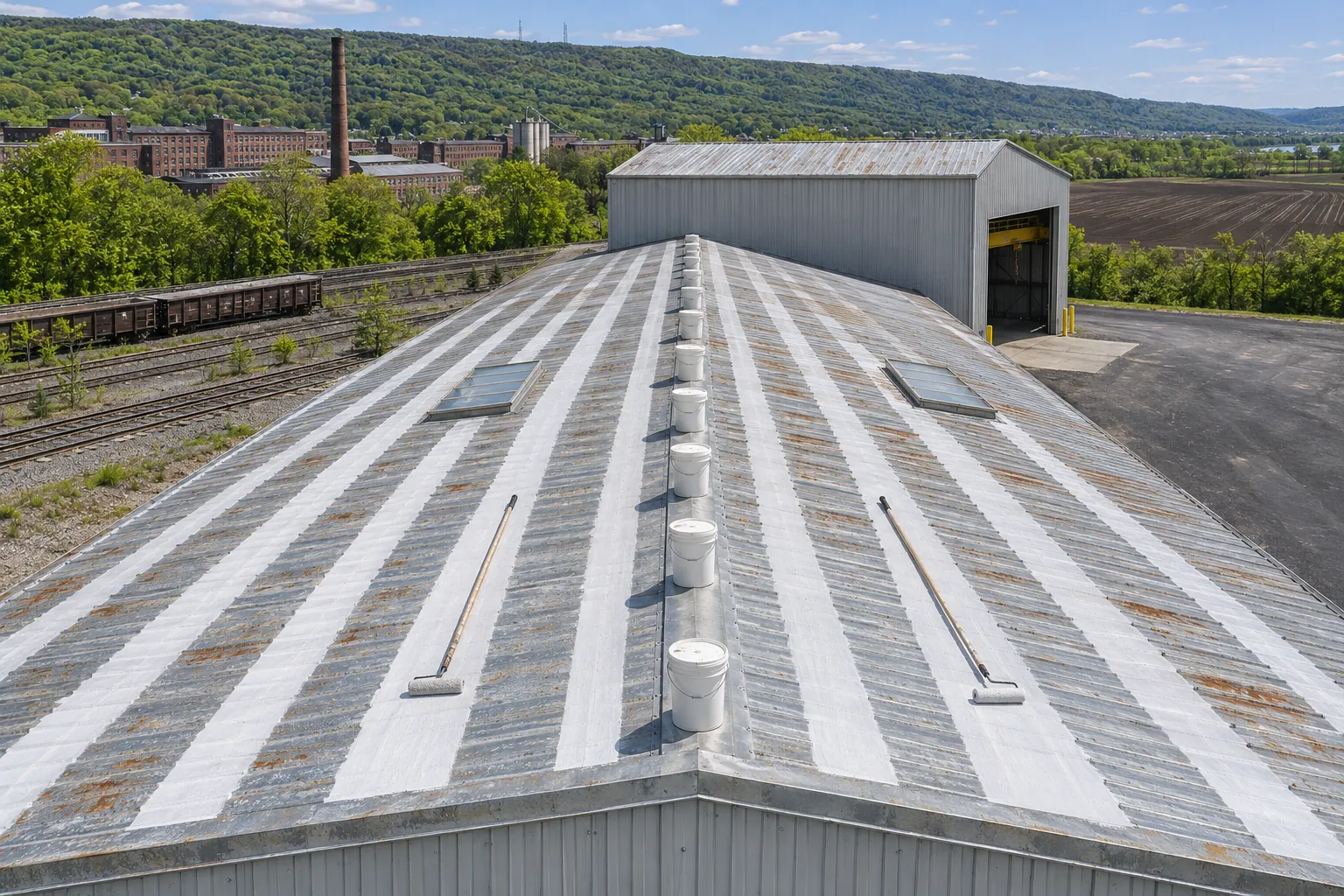
Tell us where the water sits. We will fix the drainage and coat the roof with a product that suits it.