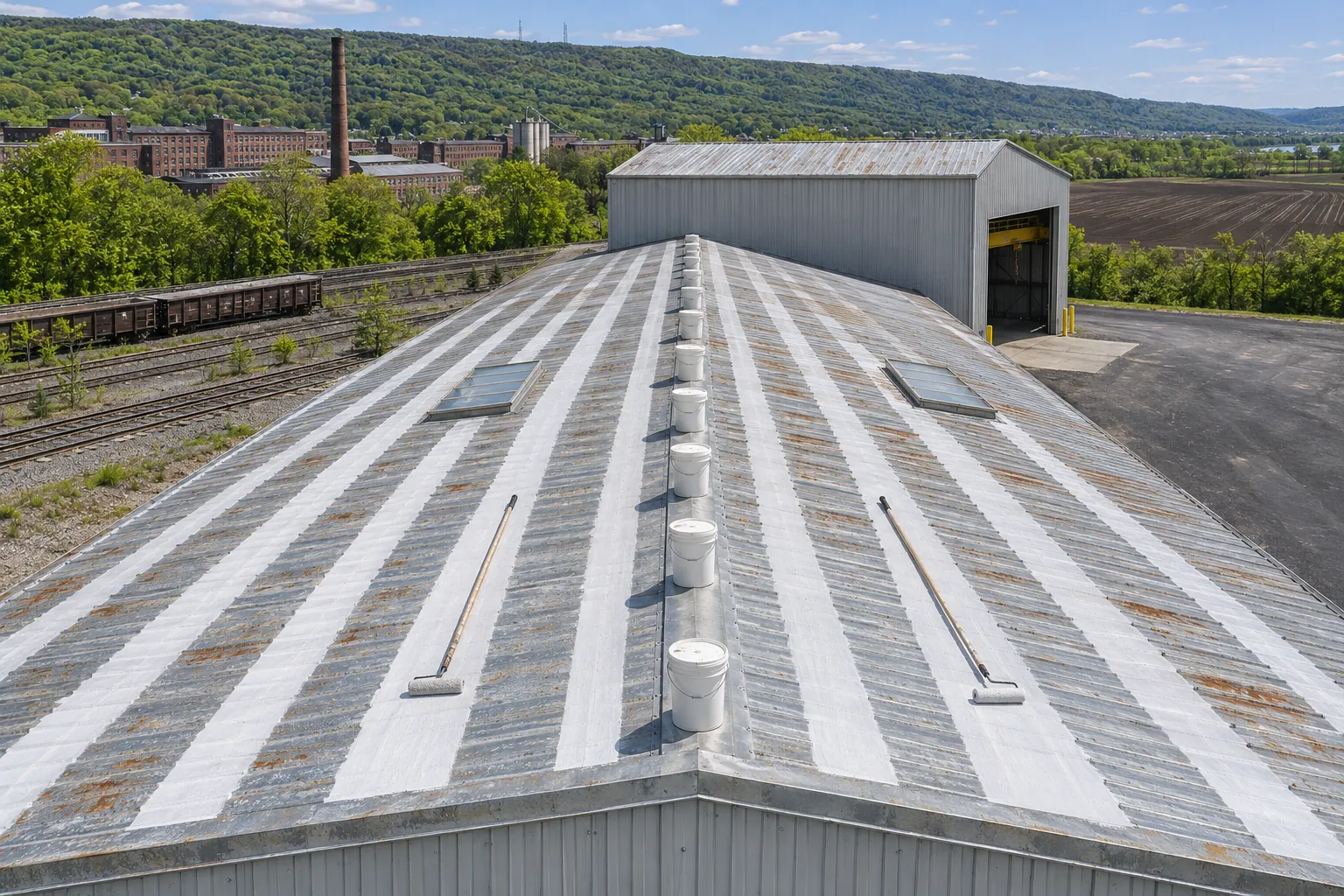
Downsides of Acrylic Roof Coating On Low Spots
Coating on a flat bay has gone soft and whitish where water sits after storms.
Acrylic re-wets under standing water, so low spots need drainage work or a different system.
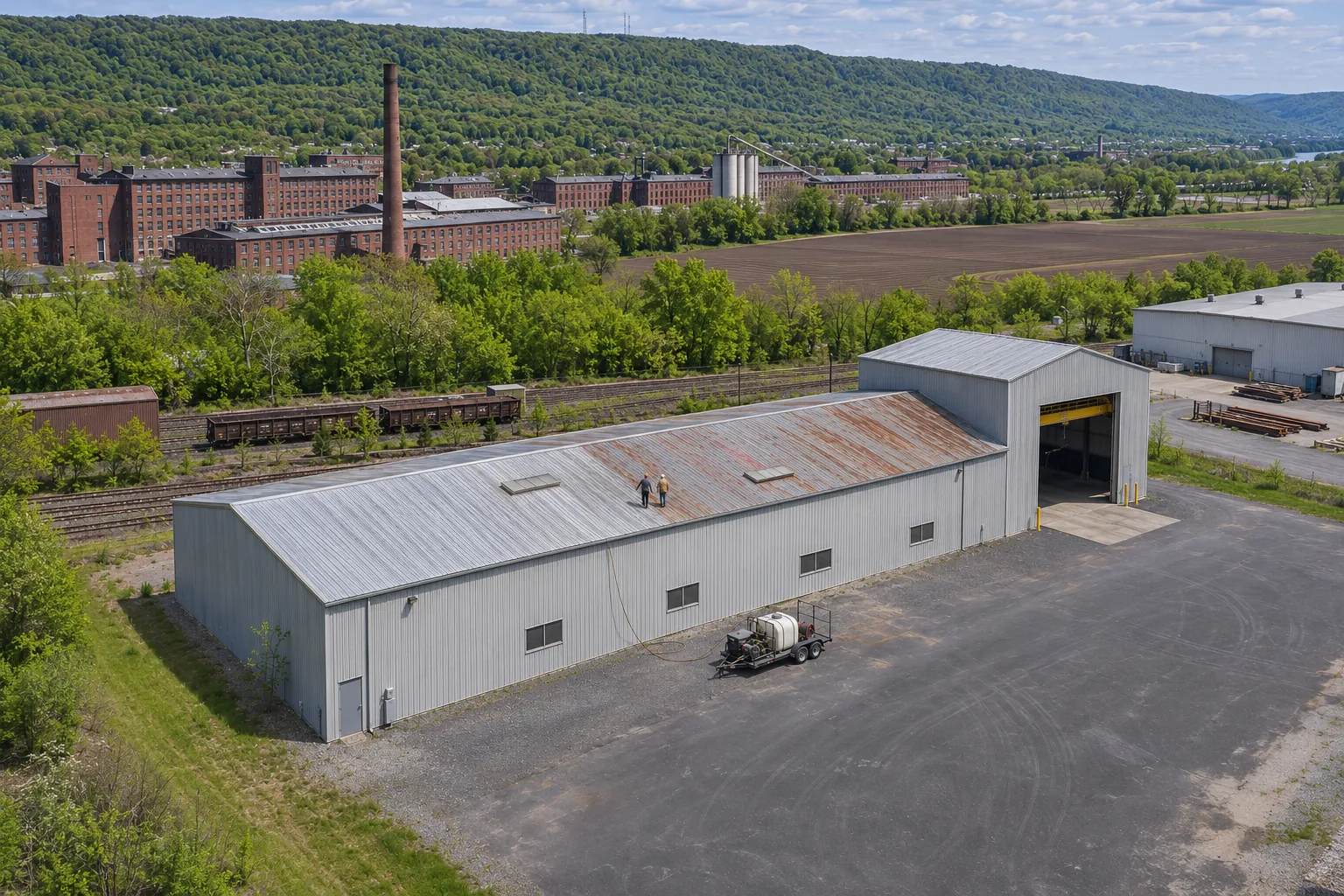
As a Reading acrylic roof coating contractor, we coat pitched metal roofs with water-based acrylic after laps, screws, and rust are repaired.
Reading acrylic roof coating works best on roofs that shed water quickly. The table shows what we look for before recommending it.
| Roof Detail | Ready For Acrylic | Fix First Or Rethink |
|---|---|---|
| Slope | Pitched panels that dry within hours | Flat sections where water stands |
| Laps | Tight, ready for fabric reinforcement | Laps that move enough to crack a film |
| Rust | Surface stain that primer will block | Rust holes through the steel |
| Existing coating | Bare metal or old acrylic, cleaned | Silicone already on the roof |
| Schedule | A dry, mild stretch in the forecast | Late fall days with cold nights and dew |
Acrylic failures show up in predictable places, and so do the roof problems that call for it.
Coating on a flat bay has gone soft and whitish where water sits after storms.
Acrylic re-wets under standing water, so low spots need drainage work or a different system.
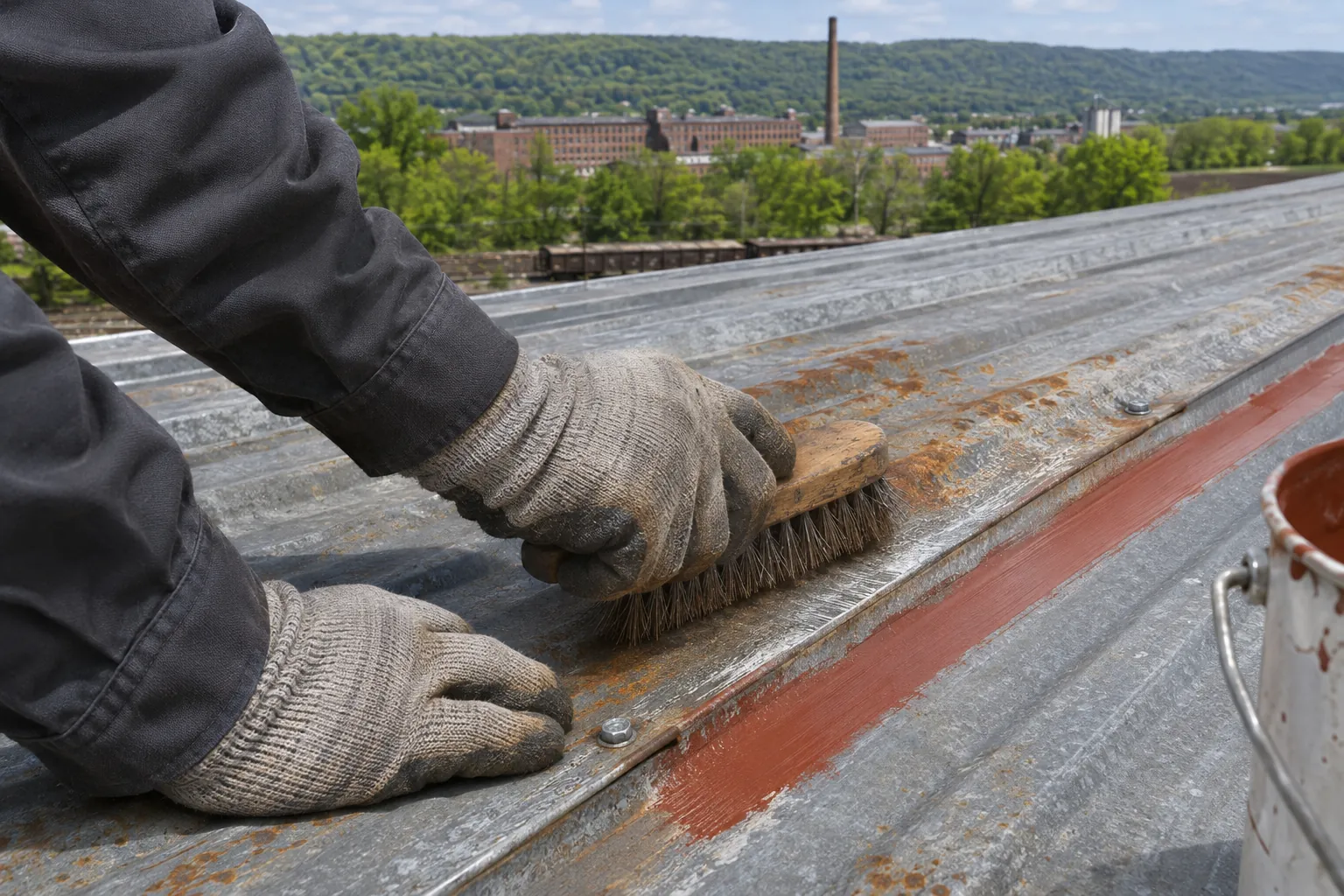
Fine leaks reappear at the same lap lines a few seasons after a coating.
The lap moved more than the film could stretch, so it needs reinforcing fabric before any recoat.
Tan blotches show through coating that was white over old rust.
Rust tannins bled through because the stains were never primed with a blocking primer.
Milky runoff in the gutters after the first storm following a coating job.
Rain or heavy dew hit the acrylic before it cured, and the top layer washed away.
Pinpoint rust dots return above the screw rows a year or two after coating.
Fasteners were coated without priming, or loose screws were left in place and moved under the film.
Acrylic systems are built up differently depending on the roof and its details.
Rust primer, sealed fasteners, and fabric at laps go down before two acrylic passes along the ribs.
Usually two or more passes, but the finished dry film thickness on the product sheet is what we measure against.
An older acrylic roof that is still bonded gets washed, spot-primed, and recoated with acrylic.

On a sloped roof that drains well, acrylic gives owners these advantages.
Acrylic stays white well and reflects summer sun off the panels.
Later maintenance coats go on after a wash, with little stripping.
Low odor during application helps on occupied buildings with open windows nearby.
Fabric bedded at laps and screw rows adds strength where panels move most.
A chalky acrylic roof can often be cleaned and recoated before leaks start. Get a ballpark range with your roof size.
Get A Free EstimateAcrylic needs time to dry, so the weather decides the work days as much as the crew does.
We check slope and drainage, test laps and screws, and confirm whether the existing finish is acrylic, silicone, or paint.
Loose screws are replaced, laps are sealed, and fabric is bedded at the joints that move most.
Work starts when surface temperature, humidity, and the overnight dew forecast all fall inside the product limits.
Primer, then two or more acrylic passes, each allowed to dry before the next, checked for thickness.
Acrylic roofs often sit beside sections that need a different approach.

Every acrylic job on steel starts with the full metal coating prep: screws, laps, and rust.
Flat bays that pond next to sloped panels are better served by silicone.

Buildings that need insulation over the panels can take foam with an acrylic topcoat.

Shingle faces on the same building get an acrylic coating only after their own inspection.
Acrylic cures by drying, so moisture slows it down. We look at surface dampness, humidity, shade, and overnight dew, along with the afternoon temperature. Coating ahead of bad conditions risks a weak film or washout.
Movement, poor adhesion, and thin coverage. We check whether cracking follows a joint defect or surface wear. A lap that keeps opening needs a repair detail before recoating; extra layers alone crack again.
The product specification and its dry film thickness decide that. We look at the panel profile, repaired areas, and coverage on raised ribs, then allow drying time between passes. Counting coats without measuring thickness misses the point.
That comes down to film thickness, how well the laps were reinforced, and whether water ever sits on it. On a well-drained pitched roof with good prep, acrylic holds up for many seasons and can be recoated rather than replaced.
Three stand out: acrylic dislikes standing water, needs dry weather to cure, and can show rust stains if primer is skipped. On pitched metal roofs those limits are easy to plan around, which is why acrylic is common there and rare on flat roofs.
Late spring through early fall gives the longest dry, mild stretches. We watch for overnight dew and rain in the first day after application, and we avoid late fall days when cold nights stop the film from curing fully.

Tell us the roof size and slope. We will inspect, plan the dry-weather window, and coat.