
Hail Damage on a Metal Roof
Inside The Building
New leaks appear at several spots after a hailstorm, with no obvious hole.
On The Roof
Hail has dented panels and cracked old sealant at laps and screw heads.
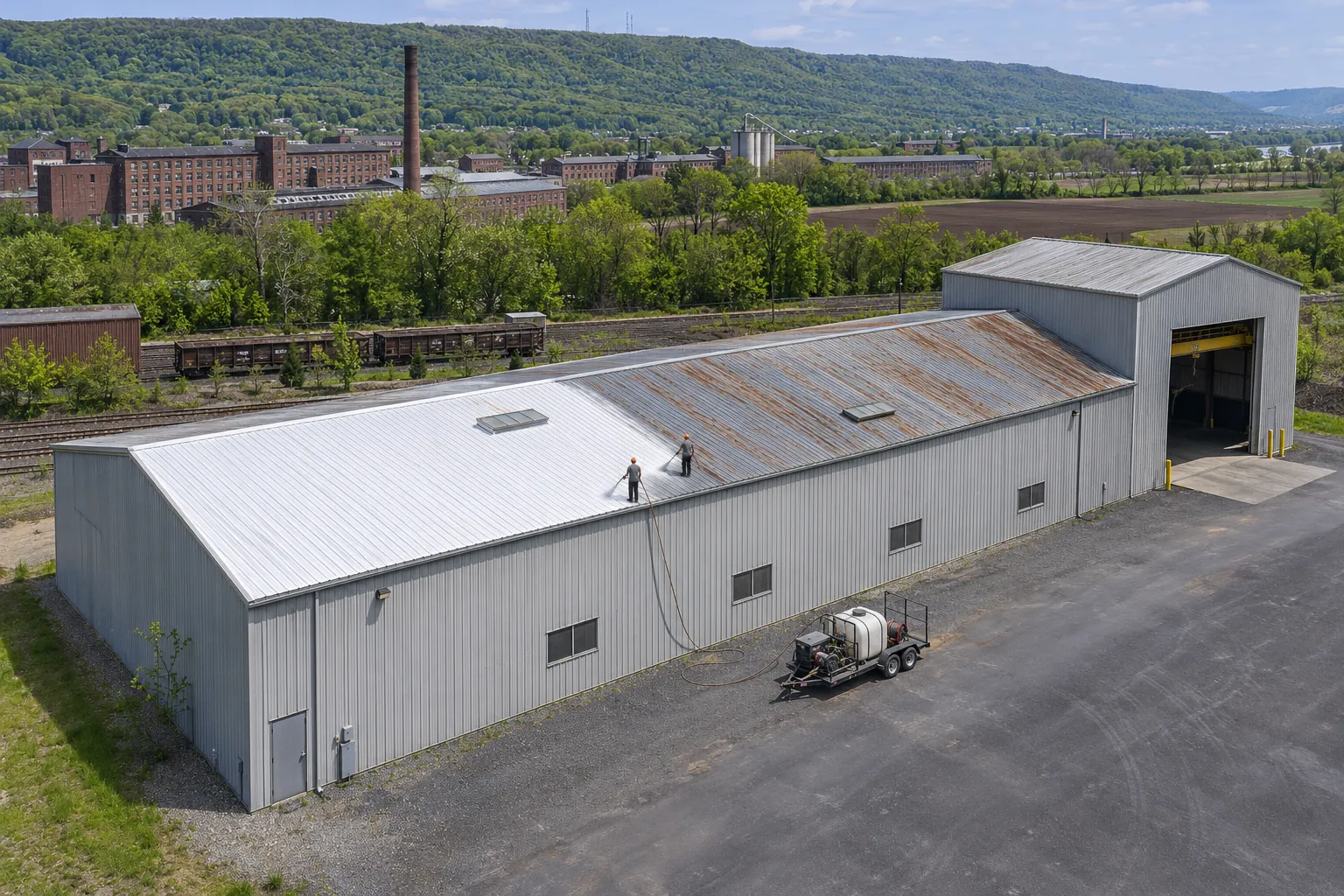
As a Ridley Park metal roof coating contractor, we survey storm damage on commercial metal roofs, repair it, and then coat the roof.
Ridley Park metal roof coating work often follows a summer storm. Hail dents, lifted flashing, opened seams, and loosened vent boots all need to be found before a coating goes on, since coating over them hides the damage without stopping the water. We survey the whole roof, photograph what we find, and repair it first.
The repair list comes with photos so you can see each problem before it is fixed.
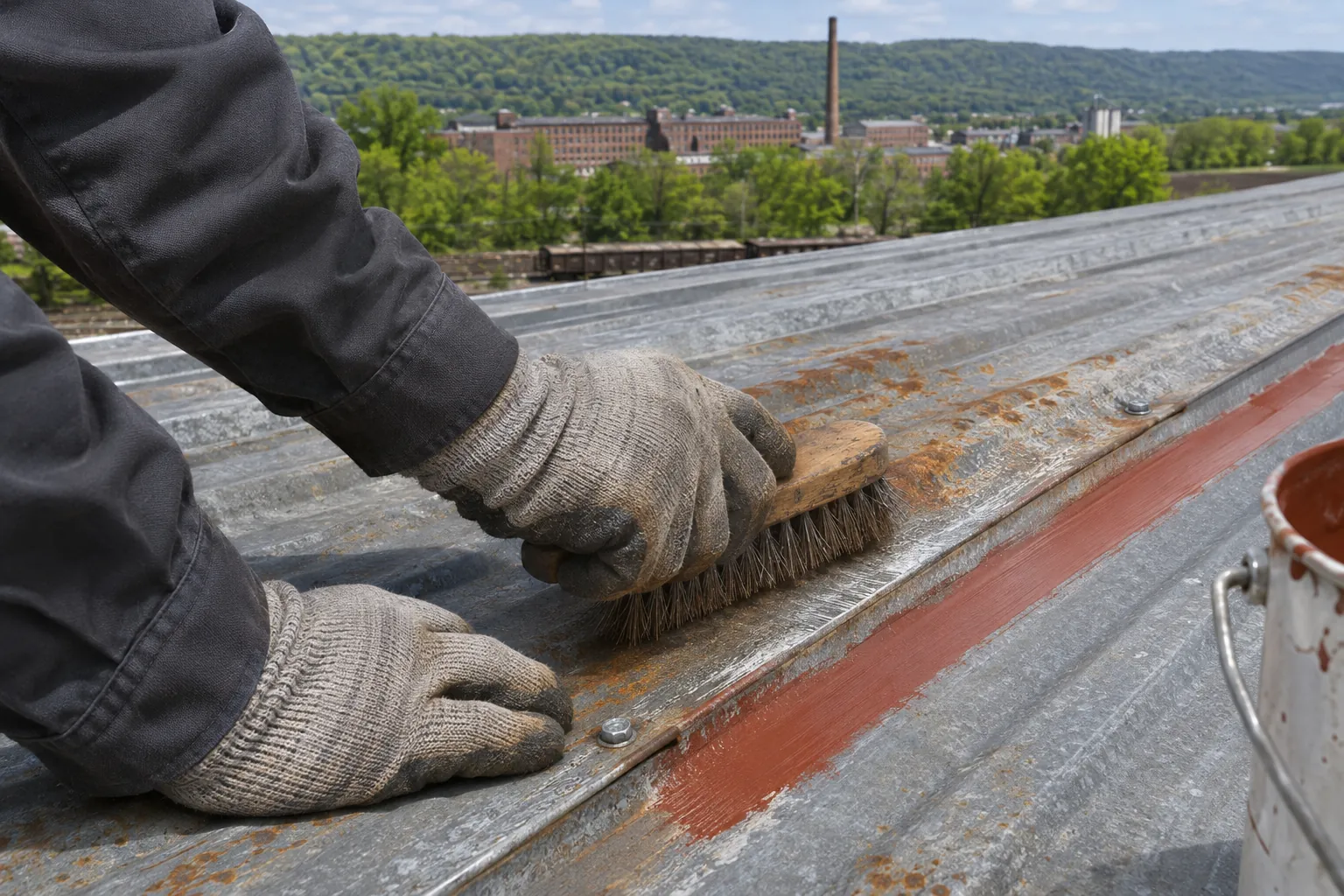
Storm damage shows inside first. Here is what each symptom tends to mean on the roof. Each one gets checked before any coating plan is written.
New leaks appear at several spots after a hailstorm, with no obvious hole.
Hail has dented panels and cracked old sealant at laps and screw heads.
Water drips near an exhaust fan or plumbing vent during storms.
Wind has loosened the vent boot or curb flashing, and deposits from exhaust have weakened the seal.
Wind-driven rain gets in along one wall during strong storms.
Edge or wall flashing has lifted and needs refastening before coating.
A ceiling stain appears where branches came down on the building.
Falling debris punctured or creased a panel, which gets patched or replaced.
Water shows on the ceiling below a rooftop unit after a windstorm.
Curb flashing has torn or lifted, and the unit base needs resealing before coating.
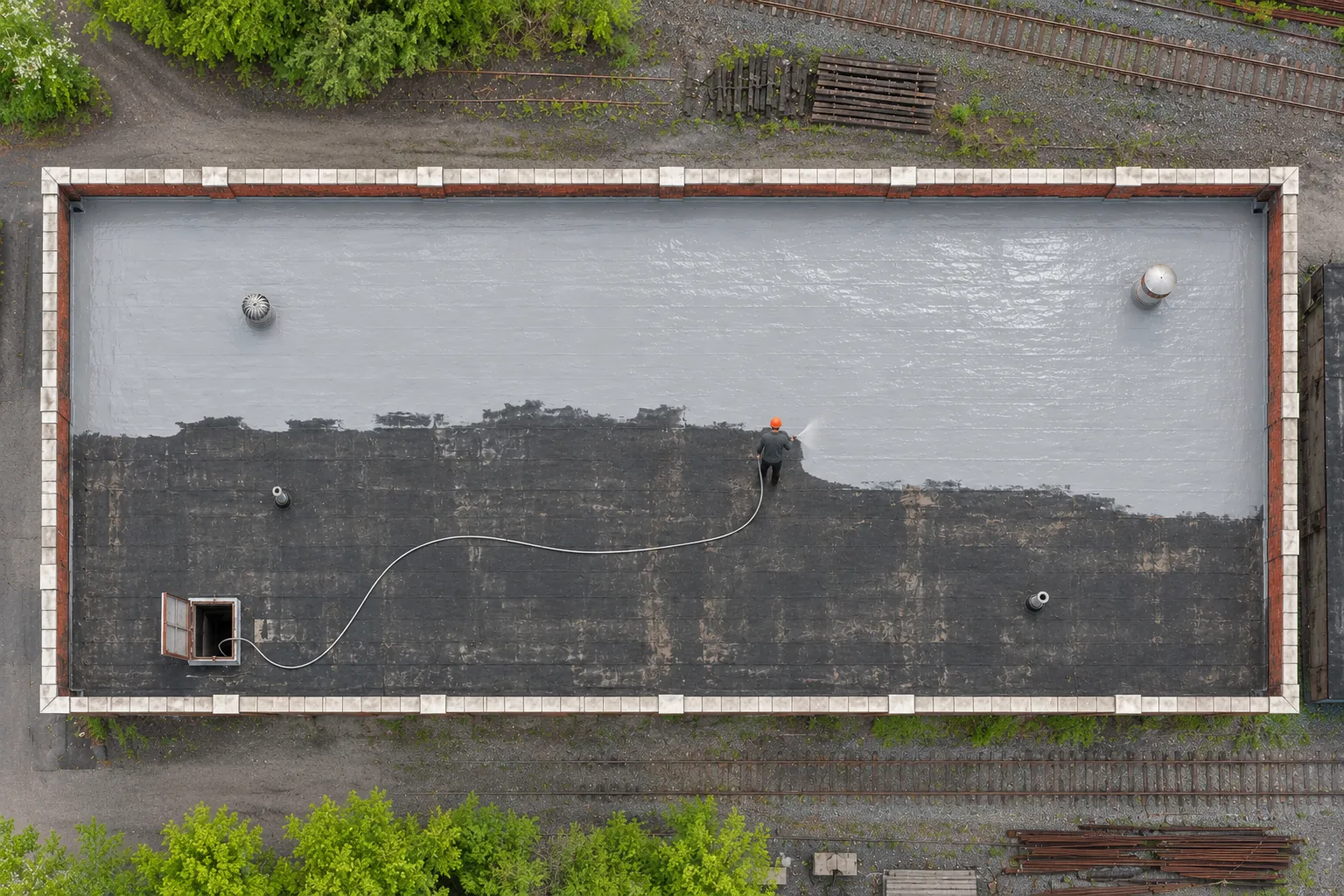
A storm-repaired, coated roof gives Ridley Park buildings these gains.
Repairs come first, so the coating sits on a roof that is whole again.
Reflashed vents and curbs get extra coating build around them.
Laps and screw heads cracked by hail are cleaned, resealed, and coated.
Photos and notes from the survey help with future inspections after the next storm.
Debris washed into gutters and drains is removed, so the repaired roof can shed water again.
After storm repairs, the system choice follows the roof type.
Every panel, seam, vent, and flashing run is checked and photographed before a coating plan is written. Photos of each finding go into the written scope.
Sloped panels with fresh repairs take primer, fabric at laps, and acrylic coats. Fabric reinforces laps that hail cracked open.
Flatter sections with puddles take silicone once their seams and drains are repaired. Drains on flat sections are cleared of storm debris first.
Vent boots, fan curbs, and exhaust stacks are reflashed and cleaned of deposits so coating bonds around them. Fan housings are cleaned before new flashing goes on.
We survey storm damage before we talk coating. Start with your roof size for a ballpark range, then we inspect. Photos from the ground help us plan the visit.
Get A Free EstimateStorm repairs slot in between the survey and the coating.
We survey every panel, seam, vent, and flashing run for storm damage and photograph it. The photo list is shared before repairs start.
Loose vent boots and curb flashing are reset and sealed, and exhaust deposits are cleaned off. Fan and unit service is coordinated with the building contact.
Punctured or creased panels are patched, and cracked sealant at laps and screws is replaced. Matching panels are used for any replacements.
The repaired roof is washed, primed, and coated, with extra build at vents and seams. Vents and seams are checked again after the final coat.
Managing roofs in more than one town? We take coating work in these places too; for others, call us or send us a message.
Office and retail roofs just west of Reading.
Wyomissing metal roof coatingMulti-building properties coated one roof at a time.
Downingtown metal roof coatingLow spots and drains checked before product choice.
Brookhaven metal roof coatingUnderside checks to sort condensation from leaks.
Collingdale metal roof coatingVent curbs and flashing need tight connections before coating nearby. We look for loose seals, damaged metal, and exhaust deposits, and coordinate any equipment service that affects the detail. The repair leaves a surface the coating bonds to and a route for later inspection.
Yes. Punctures, displaced flashing, and opened seams get repaired first. Coating over a defect you have not found makes the next leak harder to trace.
Cosmetic dents in firm panels can be coated over. Dents that cracked sealant, opened a lap, or broke through the finish get repaired first.
We do. The survey includes photos and a list of what we found and repaired, which helps with future inspections and any conversations about the storm.
Once repairs are complete and the roof is dry and within the product temperature range. Repairs usually come first, with coating scheduled for the next good weather stretch.
Dents in firm panels can be coated once cracked sealant and opened laps are repaired. Panels punctured or creased by hail or debris are patched or replaced first, then the whole roof is primed and coated.
Edge trim, ridge caps, and flashing at walls and curbs, plus loosened fasteners along the eaves. We refasten and reseal those details as part of the storm repairs.
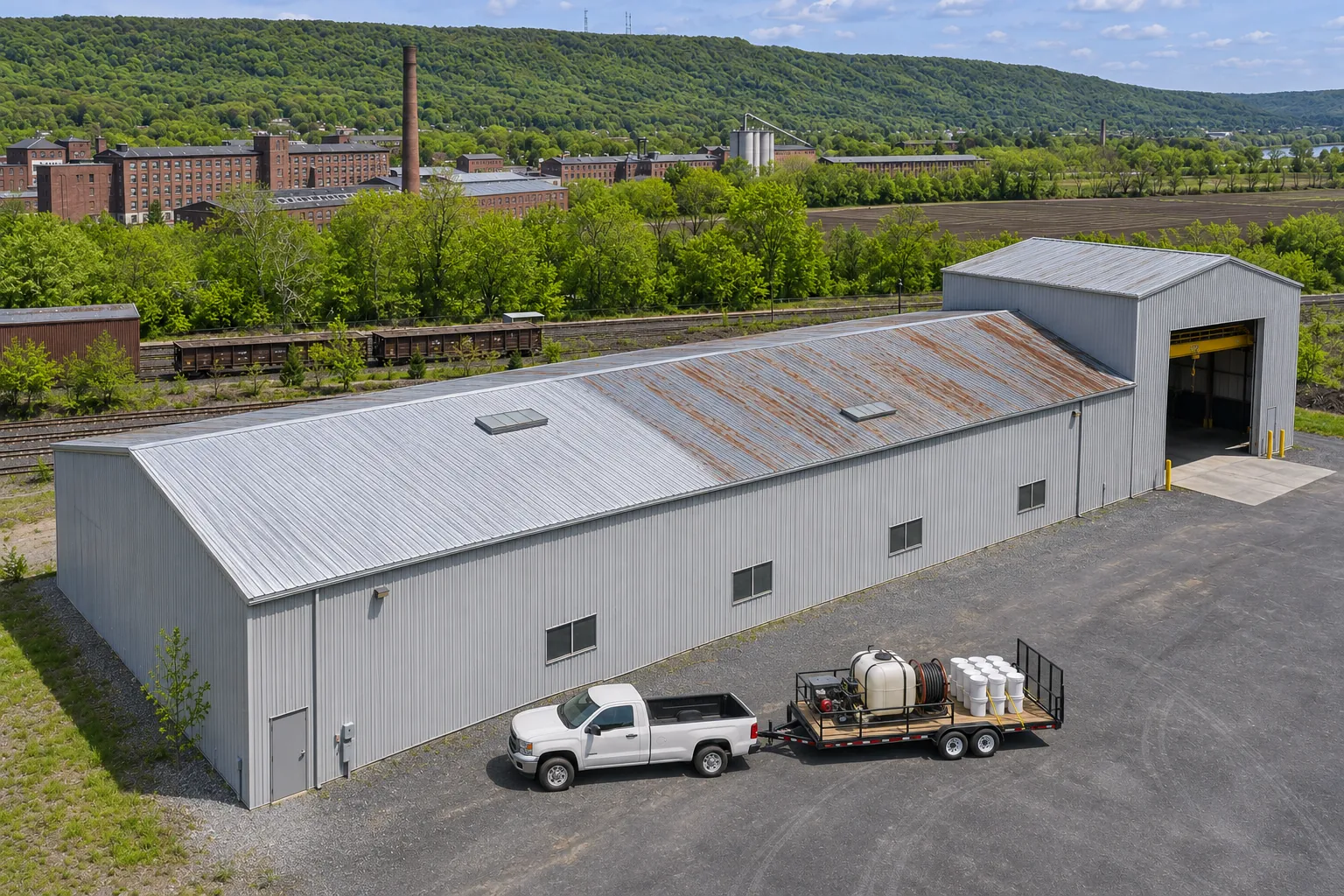
Tell us when the storm hit and where the leaks are. We will survey, repair, and coat.